Infrastructure Aluminium LED Floodlights Specification-Driven Lighting for Critical Assets Infrastructure lighting isn’t decorative. It exists to meet performance, compliance, and lifecycle risk requirements in exposed,…
Infrastructure Aluminium LED Floodlights
Specification-Driven Lighting for Critical Assets
Infrastructure lighting isn’t decorative. It exists to meet performance, compliance, and lifecycle risk requirements in exposed, high-consequence environments.
Aluminium LED floodlights are the default choice for infrastructure projects because they deliver thermal stability, mechanical strength, and electrical reliability where failure is not an option.
This category is built for engineers, asset owners, and specifiers selecting luminaires based on IP rating, voltage tolerance, optics, surge protection, and lifetime performance — not marketing claims.
Where Aluminium LED Floodlights Solve Real Problems
These luminaires are designed to operate reliably in:
- Roads, bridges, and tunnels
- Rail corridors and yards
- Ports and marine infrastructure
- Substations and utilities
- Industrial plant perimeters and service zones
They provide consistent illumination, controlled glare, and predictable output across long service intervals — even in corrosive, high-vibration, or high-moisture environments.
Product Types Available
This category typically includes:
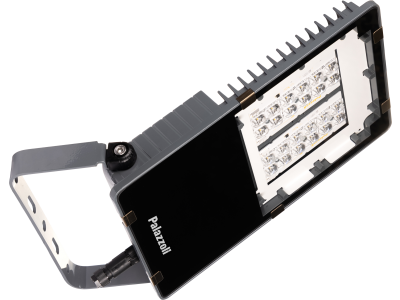
- Aluminium LED box floodlights (20W–200W)
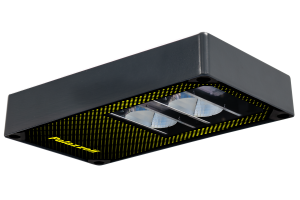
- Ultra-slim aluminium floodlights
- Adjustable single and twin spot floodlights
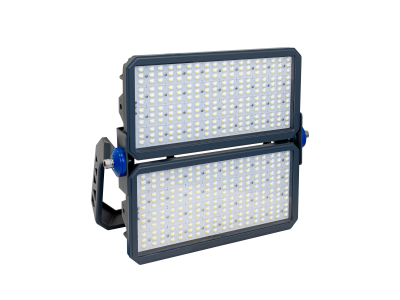
- Tri-colour and multi-wattage LED floodlights
- ATEX and explosion-protected floodlights (where required)
Many ranges support multi-wattage selection (e.g. 20/30/50W or 100/150/200W) to simplify spares, standardisation, and future upgrades.
Why Aluminium Housing Matters
Infrastructure-grade floodlights use:
- Die-cast aluminium or copper-free aluminium alloy
- Poly powder-coated or anodised finishes
- Corrosion-resistant construction for coastal and transport assets
Aluminium acts as a structural frame and primary heat sink, protecting the LED chip and driver from thermal stress and premature failure.
Environmental Protection & IP Ratings
Infrastructure lighting demands sealed, impact-resistant construction.
Typical specifications include:
- IP66 dust-tight and heavy rain protection
- Sealed optics with glass or polycarbonate lenses
- Anti-condensation breathing valves
- IK impact ratings where specified
- Glare-control options such as honeycomb lenses
These features ensure stable operation in tunnels, bridges, rail yards, ports, and substations.
Electrical Performance & Input Voltage
Infrastructure LED floodlights are engineered for:
- 240V AC nominal supply
- Wide input voltage tolerance
- High power factor
- Efficient drivers with low thermal loss
- Integrated surge protection for lightning and grid disturbances
Many models support sensor control, low-voltage interfaces, or emergency backup configurations for critical zones.
Optical Control & Beam Angles
Correct optics are critical for safety and compliance.
Options include:
- Asymmetric wide beams for roads and pathways
- Narrow asymmetric optics for perimeter and pole-top lighting
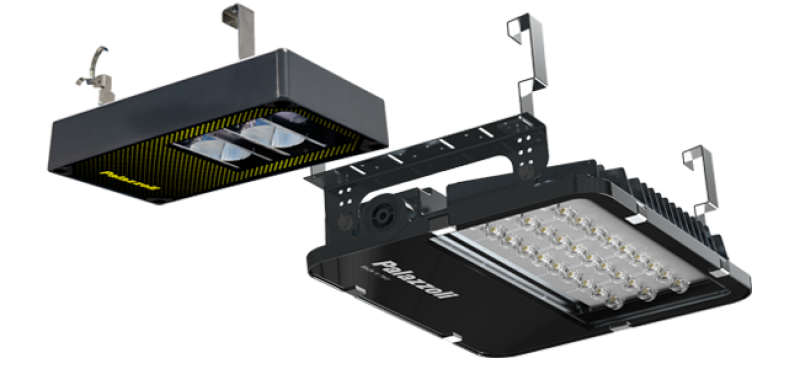
- Modular optics for infrastructure layouts
- Controlled spill and reduced glare
Performance should be evaluated on luminaire lumens and output flux, not just wattage.
Colour Temperature & Configuration Flexibility
Common infrastructure CCT options include:
- 3000K – Warm White
- 4000K – Neutral White
- 5500K – White
- 6500K – Cool White
Many fittings include tri-colour selectors and multi-wattage switches, allowing one luminaire to meet multiple site standards.
LED Lifetime & Long-Term Reliability
Infrastructure projects prioritise predictable output over decades.
Key performance indicators include:
- L70/B50 lifetime ratings
- Controlled lumen depreciation
- Stable luminous flux over time
- Thermal protection of LED chip and driver
The goal is maintenance reduction, not peak brightness on day one.
Sensors, Controls & Integration
Modern aluminium LED floodlights support:
- PIR sensors with defined detection zones
- Adjustable time and lux settings
- Plug-and-play sensor interfaces
- Integration into site control systems
This enables energy reduction in yards, depots, access zones, and public infrastructure spaces.
Engineer-Focused Selection Guide
When specifying aluminium LED floodlights for infrastructure, prioritise:
- IP rating (minimum IP66 for exposed assets)
- Surge protection level
- Beam angle suitability for the application
- Luminaire lumen output, not raw wattage
- Thermal design and housing material
- Lifetime metrics (L70/B50)
- Availability of documentation and spares
If these details are missing, the product is not infrastructure-grade.
Compliance, Documentation & Support
Infrastructure luminaires should always include:
- CE marking and WEEE compliance
- Full technical data sheets
- Clear installation instructions
- Defined warranty and support
For hazardous locations, ATEX and Ex certifications are mandatory, not optional.
Built for Assets That Can’t Fail
Infrastructure aluminium LED floodlights are engineered systems, not commodities.
Specified correctly, they deliver controlled optics, electrical protection, long LED lifetime, and minimal maintenance — keeping critical assets operational night after night, in all conditions.
If a floodlight lacks clear IP data, surge protection specs, lifetime ratings, or documentation, it doesn’t belong in infrastructure.