Industrial LED Suspension & Pendant Lights Controlled, Reliable Lighting for Industrial and Hybrid Spaces In industrial environments, a pendant (suspended) light is not a decorative…
Industrial LED Suspension & Pendant Lights
Controlled, Reliable Lighting for Industrial and Hybrid Spaces
In industrial environments, a pendant (suspended) light is not a decorative feature—it’s a precision lighting solution. Industrial LED suspension lights are designed to position luminaires at the correct working height, delivering uniform illumination, reduced glare, and long-term reliability in large or high-ceiling spaces.
These fixtures are specified to support productivity, safety, and compliance, not aesthetics.
Where Industrial Pendant Lighting Solves Real Problems
Industrial LED suspensions are used wherever ceiling height, layout, or task requirements demand controlled mounting, including:
- Production halls and manufacturing floors
- Technical interior spaces and plant rooms
- Warehouses and logistics areas
- Hybrid commercial–industrial buildings
- Retail or public-facing zones within industrial facilities
Suspension mounting puts light exactly where it’s needed, improving uniformity and reducing shadowing.
Industrial vs Residential Pendant Lighting
While pendant lighting is common above dining tables or kitchen islands, industrial pendant lights are fundamentally different.
Industrial pendant fixtures are engineered for:
- Continuous operation
- Elevated ambient temperatures
- Industrial electrical loads
- Mechanical durability and long service life
Residential pendants and chandeliers prioritise appearance. Industrial pendants prioritise thermal management, electrical protection, and compliance. The mounting method may look similar—the engineering is not.
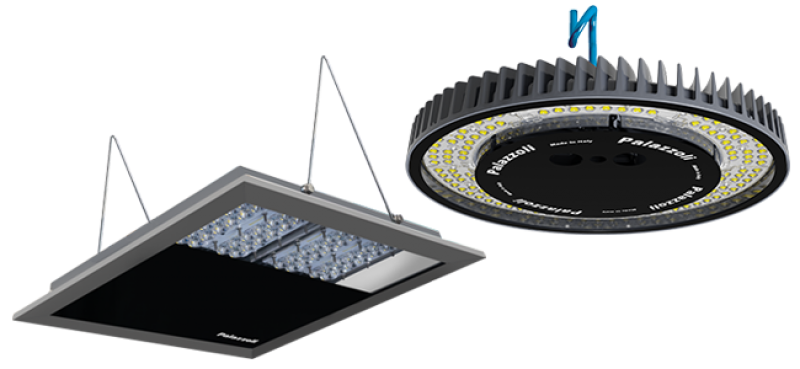
Fixture Formats: Linear, Sphere & Industrial Profiles
Common industrial suspension formats include:
- Linear pendants for continuous, even coverage over work areas
- Sphere or cylindrical pendants for general illumination
- Minimal industrial profiles designed for performance, not decoration
Even when architectural language is used, these fixtures are specified to meet industrial lighting requirements.
Glass Pendants & Controlled Interior Use
In controlled interior or hybrid spaces, industrial glass pendant designs may be specified to soften glare while maintaining compliance.
Industrial glass pendants typically feature:
- Reinforced or flat sealed glass
- Enclosed LED modules
- Durable construction suitable for long operating hours
They are used where visual comfort matters—without sacrificing reliability.
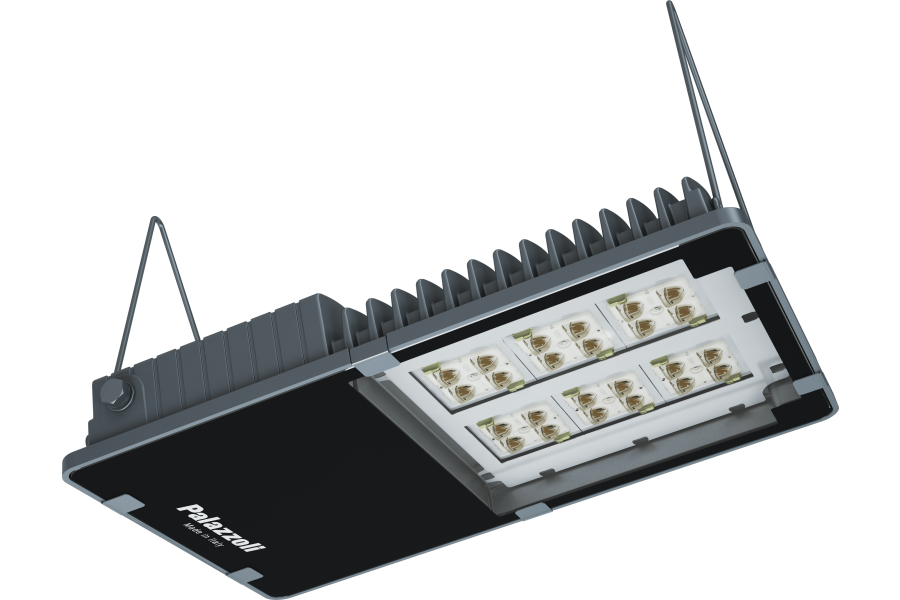
LED Technology, Efficiency & Control
Modern LED pendant lights deliver:
- High efficiency with low power consumption
- Stable light output over long service life
- Reduced maintenance compared to legacy lamps
Many systems support:
- Dimmable LED drivers
- Integration into zoned lighting schemes
- Output adjustment for task-based lighting
This makes LED suspension lighting ideal for energy-conscious industrial operations.
Practical Integration into Industrial Lighting Schemes
Suspended luminaires are often used to:
- Maintain consistent lighting across varying ceiling heights
- Improve uniformity over machinery and workstations
- Reduce glare and shadowing in task areas
They integrate cleanly with broader industrial lighting layouts, delivering predictable, compliant results.
Engineer-Focused Selection Guide
When specifying industrial LED suspension or pendant lights, engineers should confirm:
- Mounting height and suspension method
- Required lumen output and light distribution
- Beam control and glare management
- Thermal performance for continuous operation
- Housing material and durability
- Ingress protection where applicable
- Control requirements (dimming, zoning, schedules)
- Compliance with industrial lighting standards
If a pendant fixture is selected for appearance before performance, it’s the wrong product for an industrial environment.
Suspension Lighting Built for Industrial Reality
Industrial LED suspension lights are functional lighting tools, not decorative fittings.
Specified correctly, they deliver uniform illumination, long service life, reduced energy costs, and safer working environments across industrial and hybrid spaces.
Good industrial lighting isn’t about how it looks—it’s about how reliably it performs.