
Trapped key interlocks are mechanical safety systems that enforce a fixed sequence of operations before granting access to hazardous machinery. At the heart of the…
Trapped key interlocks are mechanical safety systems that enforce a fixed sequence of operations before granting access to hazardous machinery. At the heart of the system is a coded key that becomes trapped or released based on machine status. For example, when power is on, the key is locked in place. Only once the machine is safely shut down can the key be removed, allowing access to the guarded area. This ensures safety by design—no bypassing or shortcuts. IDEM’s trapped key systems provide tamper-resistant access control ideal for harsh industrial environments.
Mechanical Safety and Sequential Access Control
Sequential interlocking using trapped key systems is a proven method for controlling access in complex industrial processes. Whether isolating multiple energy sources or coordinating safe entry into confined spaces, these systems ensure that operators follow a step-by-step safety procedure. IDEM’s key exchange units and access interlocks are designed for high-reliability in applications where performance levels (PL) and safety categories (e.g. Category 3 or 4) must be met. The mechanical nature of these devices means no reliance on software or sensors—only secure, physical control.
IDEM’s Approach to Trapped Key Safety
IDEM Safety offers a robust range of trapped key interlocks tailored to meet the demands of modern automation. Unlike generic safety devices, IDEM systems are built from high-grade stainless steel or die-cast materials, with options rated up to IP69K for washdown environments. Their configurable key exchange systems and coded mechanical interlocks help prevent accidental reactivation, especially during maintenance procedures. Whether you’re working in food & beverage, heavy manufacturing, or packaging, IDEM trapped key systems provide reliable, standards-compliant machine guarding that protects both people and productivity.
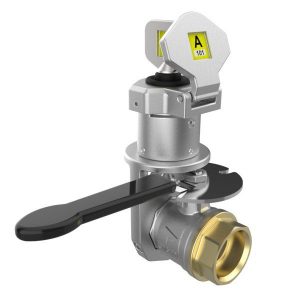
Features and Safety Benefits
Stainless Steel and Die-Cast Housing Options
The materials used in safety equipment matter. IDEM offers both stainless steel and die-cast aluminum trapped key systems to suit varying industry needs. Stainless steel is ideal for food, pharma, and corrosive environments, while die-cast models offer robust protection in general manufacturing. Both options support high mechanical strength and resistance to tampering, making them ideal for machine guard safety applications that demand long-term durability and compliance with stringent safety categories.
High Ingress Protection Ratings (Up to IP69K)
When safety systems are exposed to dust, water, or high-pressure cleaning, ingress protection is crucial. IDEM’s trapped key interlocks are available with IP65, IP67, and IP69K ratings—suitable for everything from dusty foundries to hygienic cleanrooms. These high-protection ratings ensure that mechanical interlock systems continue to function safely without degradation. As a result, operators can maintain a safe work environment without constant equipment replacement or compromise.
No Bypass or Tampering: Safety by Design
Trapped key systems are inherently resistant to tampering and unsafe overrides. Keys cannot be duplicated or substituted without matching mechanical coding, and access is physically blocked until safe conditions are met. This “safety by design” principle ensures reliable machine guarding, especially in regulated industries where safety compliance is routinely audited. IDEM’s interlock mechanisms are tested to withstand forced entry and environmental wear, delivering dependable protection without the vulnerabilities of electronic systems.
Broader Integration with Safety & Automation Systems
In modern industrial environments, IDEM’s Trapped Key Systems are only one part of an integrated safety architecture. These systems will work in tandem with various critical components such as safety PLCs or safety relays, safety contactors and safety light curtains (including muting light curtains) to ensure real-time hazard detection and safe machine shutdown. Common peripheral safety devices like the emergency stop button, two hand station, and emergency stop rope pull are all effectively managed by the safety PLC’s logic structure.
Advanced installations frequently incorporate safety non-contact switches, or locking devices such as mechanical interlock switches or solenoid locking switches—each adding specific protective functions to the machinery. To maintain continuous system health, engineers also deploy standstill monitors, speed monitors, soft starters, and reversing contactors within their automation frameworks. For measuring the product itself, solutions such as measurement light curtains can be integrated.
Beyond motion and logic safety, electrical condition monitoring is equally essential. Devices like insulation monitors, battery monitors, current monitors, voltage monitoring relays, phase sequence relays, undervoltage relays, and undercurrent monitoring relays are often integrated to detect anomalies in power flow or equipment performance, with this data displayable on HMI Touch Panels or similar systems. To support reliable operation, high-quality power relays and regulated power supplies are essential.
