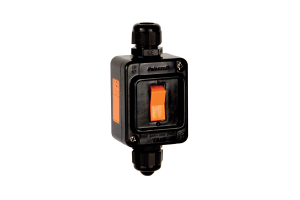
ATEX Interlocked Socket Outlets for Hazardous Areas Safe Power Connection and Disconnection in Explosive Atmospheres Power distribution in hazardous areas cannot rely on standard industrial…
ATEX Interlocked Socket Outlets for Hazardous Areas
Safe Power Connection and Disconnection in Explosive Atmospheres
Power distribution in hazardous areas cannot rely on standard industrial sockets. ATEX interlocked socket outlets are engineered to prevent live connection and disconnection under load, eliminating ignition risks caused by sparks, arcing, or overheating in explosive atmospheres.
These devices are widely specified across oil & gas, chemical processing, manufacturing, ports, and industrial infrastructure, where portable equipment must be powered safely and in full compliance with ATEX Directive 2014/34/EU.
Where ATEX Interlocked Socket Outlets Solve Critical Risk
ATEX interlocked sockets are used wherever portable or temporary electrical equipment is connected in classified areas, including:
- Hazardous production zones
- Process plants and utilities
- Outdoor and exposed industrial sites
- Marine and coastal installations
- Maintenance and service connection points
Their core function is simple and critical: isolate power before the plug can be inserted or removed.
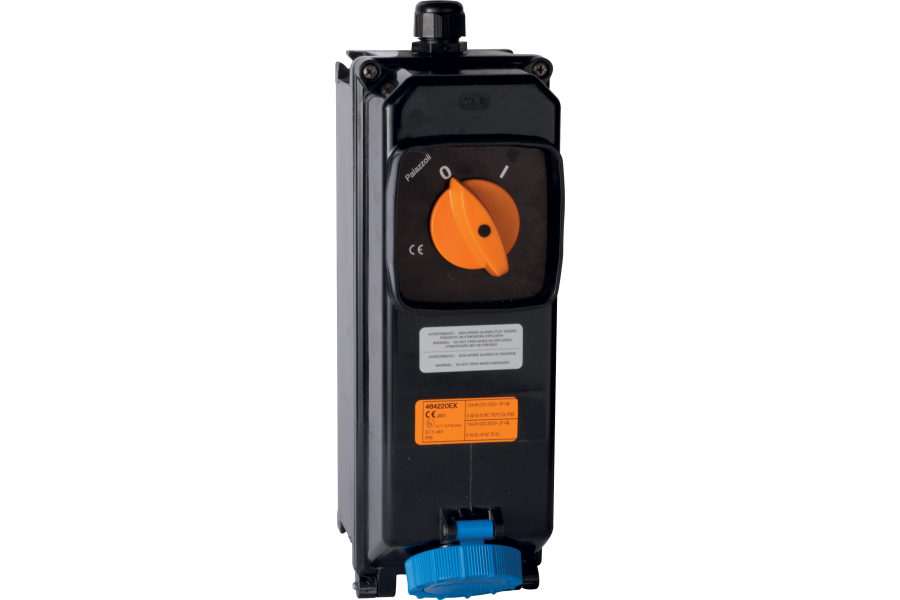
Interlocked Power Distribution in Hazardous Areas
In explosive atmospheres, hazardous area socket outlets form a key part of the power distribution system.
By integrating a mechanical interlock and disconnecting switch, the socket ensures:
- Power is isolated before plug insertion or removal
- Live disconnection under load is prevented
- Operator error does not create an ignition source
This makes interlocked sockets essential in environments where safety, uptime, and compliance are non-negotiable.
Explosion-Proof Socket Outlets & Safety Concepts
Explosion-proof socket outlets are designed so that any internal ignition is contained within the enclosure and cannot ignite the surrounding atmosphere.
When combined with interlocking mechanisms, these designs:
- Maintain protection during normal operation and fault conditions
- Prevent misuse or unsafe switching
- Support long-term safe operation in hazardous locations
Most solutions are supplied as switched and interlocked socket outlets, providing controlled isolation without compromising protection.
Ex d and Ex e ATEX Interlocked Socket Outlets
Selection depends on zone classification and risk level.
Ex d (Flameproof) Interlocked Socket Outlets
- Contain ignition within a flameproof enclosure
- Suitable for higher-risk gas environments
- Common markings include Ex db IIC and Ex II 2 G
Ex e (Increased Safety) Interlocked Socket Outlets
- Prevent arcs, sparks, and hot surfaces
- Used where explosive atmospheres are less frequent
- Maintain strict safety margins during normal operation
Both concepts are widely used across Zone 1 and Zone 2 hazardous areas, depending on the application.
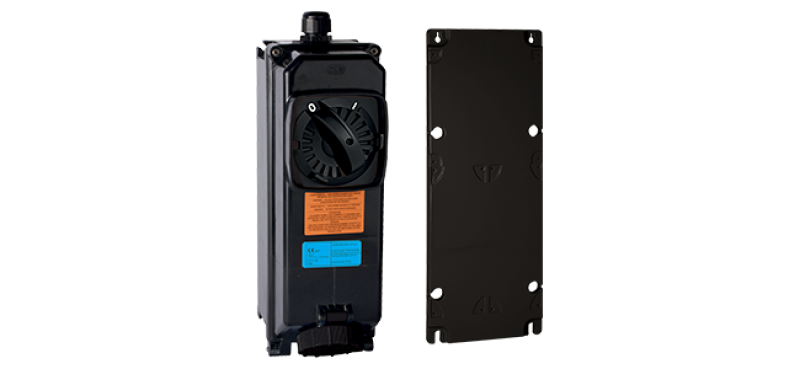
Electrical Ratings, Pin Configurations & Standards
ATEX interlocked socket outlets are typically manufactured to IEC 60309 / EN/IEC 60309-2, ensuring compatibility with standard industrial plugs.
Key specification parameters include:
- Rated current and rated voltage for industrial loads
- Pin configurations (e.g. 5-pin and other CEE formats)
- Number of poles matched to the application
- High IP ratings, commonly IP66, for harsh and outdoor use
All critical data is defined in manufacturer technical and product datasheets.
Construction, Cable Entries & Installation
To maintain certification and long-term reliability, ATEX interlocked socket outlets feature:
- Copper-free aluminium or chemical-resistant GRP housings
- Certified cable entry systems and gaskets
- Secure screw terminals and internal wiring layouts
- Surface-mount designs with stainless steel fasteners
These features support safe installation in industrial, marine, and outdoor hazardous environments.
Engineer-Focused Selection Guide
When specifying ATEX interlocked socket outlets, engineers should confirm:
- Hazardous area zone (Zone 1 or Zone 2)
- Protection concept (Ex d or Ex e)
- Rated voltage and rated current
- Pin configuration and number of poles
- Ingress protection rating (minimum IP66 for exposed sites)
- Cable entry compatibility and gland certification
- Compliance with IEC 60309 and ATEX 2014/34/EU
If interlocking function, protection concept, or certification is unclear, the socket outlet is not suitable for hazardous areas.
Reliable Power Connections in Explosive Environments
ATEX interlocked socket outlets are not standard industrial connectors. They are certified safety devices designed to control power safely in explosive atmospheres.
Specified correctly, they deliver controlled isolation, explosion protection, regulatory compliance, and long-term operational reliability across demanding industrial applications.
If a socket outlet allows live connection or disconnection, lacks a defined protection concept, or does not carry clear ATEX certification, it does not belong in a hazardous area.