ATEX Control & Signalling Devices for Hazardous Areas Certified Operation and Indication in Explosive Atmospheres Operating electrical equipment in hazardous areas demands certified control and…
ATEX Control & Signalling Devices for Hazardous Areas
Certified Operation and Indication in Explosive Atmospheres
Operating electrical equipment in hazardous areas demands certified control and signalling devices that eliminate ignition risk while maintaining reliable process control. ATEX control devices and ATEX signalling devices are engineered for use where flammable gases, vapours, or hazardous materials may be present.
These products are essential across oil & gas, chemical processing, manufacturing, utilities, and industrial infrastructure, where sparks, faults, or excessive surface temperatures cannot be tolerated.
Where ATEX Control & Signalling Devices Solve Risk
These devices are specified wherever local control, indication, or emergency interaction is required within a classified area, including:
- Hazardous production zones
- Process plant field stations
- Loading bays and transfer areas
- Confined or restricted access locations
- Zone-rated machinery and automation systems
Their role is to provide safe human-machine interaction without compromising explosion protection.
Hazardous Area Classification: Zone 1 & Zone 2
Correct selection starts with hazardous area classification.
- Zone 1: Explosive atmospheres likely during normal operation
- Zone 2: Explosive atmospheres unlikely and short-duration
Equipment approved for Zones 1 and 2 must remain safe during normal operation and under fault conditions, addressing ignition sources such as arcs, sparks, and hot surfaces.
Certified Protection Techniques
ATEX control and signalling devices rely on proven protection concepts, including:
- Ex d (Flameproof) – contains internal ignition within the enclosure
- Ex e (Increased Safety) – prevents arcs, sparks, and excessive temperatures
- Ex i (Intrinsically Safe) – limits energy to eliminate ignition potential
- Ex p (Purge & Pressurisation) – excludes explosive gases from enclosures
- Ex n – for specific Zone 2 applications
These protection techniques enable compliant deployment of explosion-proof and intrinsically safe equipment in hazardous locations.
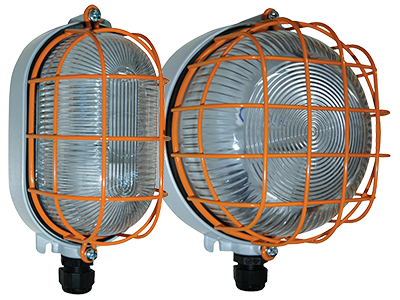
Control Stations & Hazardous Area Panels
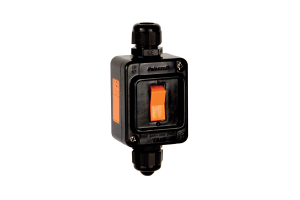
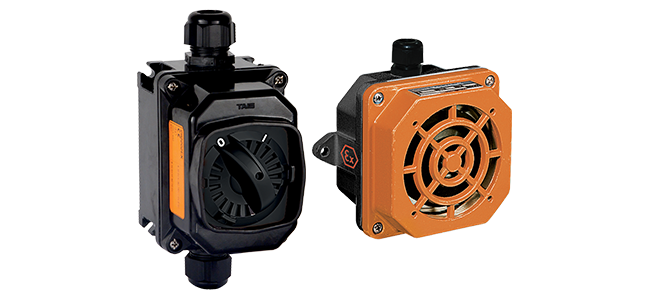
ATEX control stations allow operators to start, stop, reset, or acknowledge equipment directly within hazardous areas.
Typical configurations include:
- Pushbuttons and selector switches
- Emergency stop devices
- Indicator lights and status lamps
For larger systems, devices are integrated into hazardous area control panels, combining multiple functions within certified enclosures to maintain ATEX compliance while managing electrical faults.
Explosion-Proof Switches & System Interfaces
Explosion-proof switches prevent sparks or hot gases from escaping into the surrounding atmosphere. These are commonly installed alongside:
- ATEX junction boxes
- Certified cable glands
- Zone-rated wiring systems
Correct integration of switches, enclosures, and cable entries is essential to maintaining protection levels across Zone 1 and Zone 2 installations.
ATEX Signalling Devices for Operator Awareness
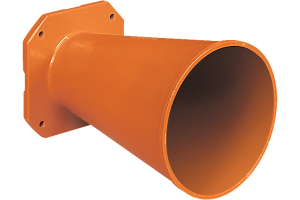
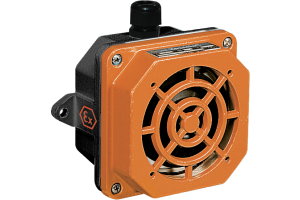
ATEX signalling devices provide visual and audible indication of machine status, alarms, or abnormal conditions in explosive environments.
They:
- Improve operator awareness
- Reduce the need for direct panel access
- Support faster response to faults or alarms
Signalling devices are a critical layer in system-level hazardous area safety.
Engineer-Focused Selection Guide
When specifying ATEX control and signalling devices, engineers should confirm:
- Hazardous area zone (Zone 1 or Zone 2)
- Required protection concept (Ex d, Ex e, Ex i, Ex p, Ex n)
- Control function (start/stop, E-stop, indication, reset)
- Integration method (standalone station or control panel)
- Environmental rating (IP rating, temperature class)
- Cable entry and gland compatibility
- Full ATEX certification and documentation
If protection method, zone rating, or certification is unclear, the device should not be installed in a hazardous area.
Certification & Compliance
All ATEX control and signalling equipment must comply with:
- ATEX Directive 2014/34/EU
- Applicable IEC / EN hazardous area standards
Products should be supplied with:
- Clear ATEX markings
- Technical datasheets
- Installation and maintenance instructions
Reliable Control for Hazardous Area Automation
ATEX control and signalling devices are not standard industrial components. They are certified safety devices designed to support reliable automation, operator interaction, and compliance in explosive atmospheres.
Specified correctly, they deliver safe control, clear indication, long service life, and regulatory confidence for hazardous area installations.
If a control or signalling device lacks clear ATEX approval, defined protection technique, or proper documentation, it doesn’t belong in a hazardous area.