
Residual Current Transformers for | Monitoring for Steel Plants Residual current transformers and residual current monitors are critical safety components in modern electrical equipment used…
Residual Current Transformers for | Monitoring for Steel Plants
Residual current transformers and residual current monitors are critical safety components in modern electrical equipment used across industrial plants – and nowhere more than in steel plants and steel mills. In the steel industry, extreme heat, heavy mechanical loads, high harmonics and continuous operation make electrical faults more likely and far more expensive. A correctly selected residual current transformer for steel plants, combined with robust residual current monitoring for the steel industry, provides the foundation for early fault detection, steel plant electrical safety and uninterrupted production. This category page explains how residual current transformers (RCTs), residual current monitors (RCMs) and general current monitors work together to deliver leakage current detection in steel mills, earth leakage monitoring in steel production, and comprehensive electrical protection across furnaces, casting lines, rolling mills and auxiliary systems. These devices also integrate with circuit breaker systems, motor control centres, and power distribution networks to create a unified electrical protection strategy across heavy industry.

Safeguarding Electrical Systems – The Imperative of Current Monitoring
Electrical systems in steel manufacturing operate under some of the harshest electrical and environmental conditions in any industry. Undetected earth leakage current, insulation breakdown or developing faults can escalate rapidly due to extreme temperatures, vibration, dust, scale and heavy cyclic loads. Residual current monitors, residual current transformers and differential current monitoring at the steel plant substation give engineers real-time visibility into current leakage, total leakage current behaviour and early-stage insulation problems. These systems interpret both the resistive component and capacitive component of the leakage current waveform, evaluating RMS value detection with precision even where magnetic fields and eddy currents distort signals.
When combined with heavy-duty monitoring relays designed for harsh environments, they support predictive maintenance, ensure compliance and prevent catastrophic failures. RCMs also complement insulation resistance tester measurements, enabling continuous condition monitoring of electrical installations exposed to polluted insulators, dew point moisture, dry bands, light rain or heavy rain.
The Unseen Dangers of Electrical Faults: From Shock Hazards to Fire Risks
Many dangerous electrical faults in a steel mill remain hidden until severe damage has already occurred. Leakage currents from furnaces, rectifiers and VSDs can flow undetected through busbars, cable supports or structural steelwork. Heat, scale and dust degrade insulation resistance, increasing the likelihood of ground faults. Without proper residual current detection or an earth leakage relay, the plant faces rising residual voltage, overheating conductors and the risk of fire or equipment failure.
Magnetic flux leakage effects occur when magnetic lines of force interact with damaged insulation or conductive paths, amplifying the risks. In high-power furnace systems, residual magnetic flux and eddy currents inside ferromagnetic materials can create additional hotspots, further amplifying current leakage and increasing fire risk.
A Holistic Approach to Electrical Safety Monitoring
Steel plants cannot rely on one protective device. A complete system integrates residual current transformers, RCMs for steel plants, insulation monitors, SSR monitors, measuring relays and general current monitors into a coordinated electrical safety framework. This layered approach strengthens machinery safety and forms the backbone of industrial electrical safety in heavy industry.
Advanced devices incorporate principles similar to Zero Current transformers and core balance current transformer architectures to ensure extremely high sensitivity, even in distorted environments. Modern steel plants also benefit from hybrid method analysis techniques that evaluate both AC/DC types of leakage currents using orthogonal relation mathematical models.
Understanding the Threats: Residual Currents and Other Electrical Anomalies
Residual currents are only one class of electrical anomaly. Overloads, phase imbalance, harmonic distortion, electromagnetic induction effects, eddy currents and insulation breakdown all threaten steel plant reliability. Effective protection requires combining residual current detection with general current monitoring and insulation measurement across the entire installation.
What Are Residual Currents? The Concept of Differential Current
Residual currents represent the imbalance between currents in the active conductors and the neutral return path. Residual current transformers installed on EAF feeders, rolling mill motors or casting lines measure this imbalance using toroidal cores that monitor magnetic flux changes. Even when waveforms contain strong harmonics, eddy current distortions or alternating magnetic field effects, modern RCTs maintain accurate measurement.
RCMs interpret these signals to detect leakage currents long before damage occurs, differentiating between resistive leakage current, capacitive leakage and complex harmonic-induced leakage current waveform patterns.
The Hazards Posed by Residual Currents: Personal and Equipment Risks
Residual currents energise exposed metal structures, posing shock hazards in harsh steel-plant environments. They also accelerate insulation breakdown, triggering faults in MCCs, motors, busbars and transformers. Persistent leakage contributes to nuisance trips, overheating and unplanned downtime. These risks increase where electromagnetic induction and eddy currents are present in heavy ferromagnetic materials surrounding furnace and rolling equipment.
Beyond Residuals: Other Critical Current-Related Hazards
Steel plants face risks such as:
-
Overcurrent
-
Inrush surges
-
Harmonic distortion
-
Phase failure
-
Capacitive leakage
-
Electromagnetic interference
True RMS monitors, SSR monitors and measuring relays provide a full picture of system health. Many systems integrate field probe or probe coil designs — concepts borrowed from non-destructive testing and Eddy Current Testing — to better interpret magnetic behaviours around conductors.
Residual Current Transformers (RCTs) – The Foundation of Leakage Detection
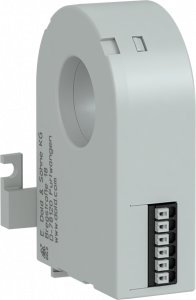
Residual current transformers provide the primary sensing function for leakage current detection in steel plants. They must withstand vibration, extreme heat, contaminated atmospheres and fluctuating magnetic fields while maintaining accuracy in high-harmonic environments. Modern RCTs operate similarly to core balance current transformer architecture but with improved noise immunity and compensation for residual magnetic flux.
How Residual Current Transformers Work: Principles and Operation
RCTs enclose active conductors inside a magnetic core. When the currents are balanced, magnetic flux cancels. When leakage occurs, imbalance produces measurable flux. This induces eddy currents in the core, which the secondary winding converts into a proportional measurement signal. This signal is sent to an RCM, earth leakage relay or VARIMETER RCM device for evaluation.
Types of RCTs and Their Applications: Tailoring Detection to Fault Characteristics
Steel applications require specialised RCTs:
-
Type A for AC + pulsating DC
-
Type B for smooth DC and high-frequency leakage
-
Large-aperture RCTs for busbar trunking
-
Compact RCTs for MCC panel monitoring
-
Zero Current transformers for ultra-low-level leakage detection
RCTs must handle the full spectrum of leakage current waveform shapes caused by nonlinear loads, rectifiers and furnace power supplies.
Installation and Sizing Considerations for RCTs
Key requirements include:
-
Correct aperture for conductor diameter or busbars
-
Routing all active conductors through the core
-
Avoiding transformer-induced magnetic fields
-
Ensuring stable mounting under vibration
-
Minimising eddy currents by positioning RCTs away from ferromagnetic structures
Improper installation can introduce residual magnetic flux errors and reduce measurement accuracy.
Integration with Safety Devices: From Relays to Circuit Breakers
RCTs interface with:
-
RCMs
-
Earth leakage relay systems
-
SSR monitors
-
Circuit breaker trip units
This integration creates a complete steel-plant safety circuit capable of selective tripping and alarm escalation.
Residual Current Monitors (RCMs) – Continuous Vigilance and Active Protection
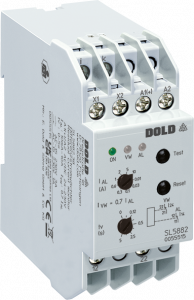
RCMs are the intelligence layer behind the leakage detection system, interpreting RCT signals, trending leakage data and triggering alarms or shutdowns.
The Role of RCMs in Proactive Electrical Safety
Steel plants rely on proactive maintenance. RCMs identify insulation degradation, conductive dust accumulation and evolving ground faults before they become dangerous. These systems also support condition monitoring and integrate with insulation resistance tester data for deeper analysis.
Key Features and Functionality of Modern RCMs
Modern RCMs include:
-
LED indicators
-
Fast response times
-
Adjustable time delays
-
RMS value detection
-
AC/DC type evaluation capability
-
4–20 mA outputs
-
Compatibility with SCADA systems
-
VARIMETER RCM technology
They also manage orthogonal relation algorithms for more accurate leakage interpretation.
RCMs in Specific Critical Applications
RCMs are essential for:
-
EAF and ladle furnace systems
-
Rolling mill drive protection
-
Casting line monitoring
-
MCC panels
-
Auxiliary pumps, fans and compressors
-
Electric vehicle chargers and EV charging stations in steel plant parking areas
Differentiating RCDs from RCMs
RCDs disconnect circuits instantly.
RCMs continuously measure, store and interpret leakage behaviour — essential for industrial processes that cannot tolerate abrupt shutdowns.
General Current Monitors – Beyond Residuals for System Health and Performance
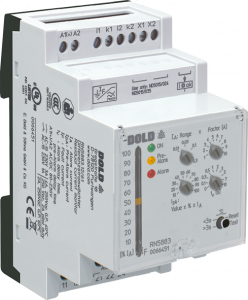
While RCMs monitor leakage, general current monitors protect motors, transformers and auxiliary systems from overcurrent, imbalance and mechanical failure.
Broader Current Monitoring for Preventative Maintenance
General monitoring identifies:
-
Overloads
-
Underloads
-
Jamming
-
Pump cavitation
-
Fan imbalance
-
Furnace auxiliary stress
This data complements leakage monitoring for predictive maintenance.
Types of Current Monitoring: True RMS, Adjustable, and More
Steel plants use:
-
True RMS monitors
-
Adjustable overload relays
-
Phase failure/sequence relays
-
Multifunction electrical devices
-
SSR monitors
Applications of General Current Monitoring
Monitoring protects:
-
Rolling mill motors
-
Cooling systems
-
Hydraulics
-
Dust extraction
-
Flaw detection equipment used in non-destructive testing operations
Integration with Control Systems and Safety Relays
Monitoring devices communicate with:
-
SCADA platforms
-
Safety controllers
Safety relays interpret signals to perform controlled shutdowns, improving operational safety.
The Synergy of Safety: Creating a Comprehensive Electrical Protection Strategy
A strong safety concept requires coordinated monitoring of leakage, load, insulation and environmental conditions. By integrating electromagnetic induction effects, harmonic analysis and insulation condition data, steel plants achieve far greater reliability.
How RCTs, RCMs and Current Monitors Complement Each Other
Together they deliver:
-
Early leakage detection
-
Overload and imbalance protection
-
Predictive maintenance insights
-
Fail-safe operation
Meeting Regulatory Compliance: Standards and Best Practices
Recommended practices include:
-
Using appropriate AC/DC types of RCMs
-
Documenting leakage trends
-
Coordinating circuit breaker and relay settings
The Cost-Benefit of Proactive Monitoring
By preventing transformer damage, furnace outages and cable failures, proactive monitoring saves exponentially more than it costs.
Selecting and Implementing Current Monitoring Solutions
Selecting monitoring hardware requires analysing load profile, conductor size, harmonics, mechanical stresses and integration needs.
Key Factors in Choosing the Right Devices
Consider:
-
Harmonic levels
-
Conductor diameter or busbars
-
Sensitivity thresholds
-
Environmental durability
-
Electromagnetic interference
-
Integration with SCADA/PLC
Installation Best Practices
Ensure:
-
Correct RCT aperture
-
Proper shielding
-
Vibration-resistant mounting
-
Minimised stray magnetic fields
Maintenance and Testing
Key tasks include:
-
RCM functional tests
-
Verification of leakage values
-
Inspection for residual magnetic flux
-
Trend analysis
-
Insulation resistance testing
Advanced Considerations and Future Trends in Current Monitoring Safety
Steel plants increasingly adopt IoT, cloud analytics and advanced electromagnetic diagnostic tools.
Smart Monitoring Systems: Predictive Maintenance and IoT Integration
Smart systems integrate:
-
RCM data
-
RCT signals
-
Load profiles
-
Environmental sensors
This supports high-level analytics, including magnetic flux leakage monitoring and hybrid-method fault prediction.
Specialised Monitoring: Standstill, Ground Fault Location and Explosion Protection
Steel plants require:
-
Standstill monitoring
-
Ground fault location systems
-
Explosion-proof monitoring
-
Eddy Current Testing for flaw detection in critical components
The Role of Safety Relays and Safety Controllers
Safety controllers integrate signals from:
-
RCTs
-
RCMs
-
Measuring relays
-
Field probes
-
Probe coils
They coordinate controlled shutdowns of rolling mills, furnaces and casting lines.
Investing in Comprehensive Electrical Current Monitoring for Uncompromised Safety
Residual current transformers, residual current monitors, and general monitoring relays are essential for safe, reliable steel manufacturing.
Recap of Key Benefits: Protection, Prevention and Performance
They deliver:
-
Early insulation fault detection
-
Improved industrial safety
-
Machinery protection
-
Fewer nuisance trips
-
Compliance with global standards
Prioritising a Safe Electrical Environment
Steel plants should review existing leakage detection and current monitoring strategies to ensure protection across all furnaces, motors, MCCs and power distribution pathways. Upgrading to modern RCTs, RCMs and monitoring relays improves safety, reduces downtime and enhances long-term operational resilience.