
Residual Current Transformers | Monitoring for Data Centers Residual current transformers and residual current monitors are central to protecting low voltage and medium voltage electrical…
Residual Current Transformers | Monitoring for Data Centers
Residual current transformers and residual current monitors are central to protecting low voltage and medium voltage electrical systems in modern data centers. With continuous 24/7 operation, dense IT loads, harmonic-rich UPS outputs, long transmission line runs, and sensitive digital infrastructure, even small leakage current waveforms can disrupt operations or escalate into major failures. Correctly selected residual current transformers for data centers, combined with advanced on-line monitoring and trend analysis, ensure early detection of insulation degradation, resistive leakage current, capacitive leakage current, or rising electric potential long before uptime is threatened.
Residual current monitors (RCMs), core balance current transformers, Hall current sensors, optical sensor systems, and general current measurement devices work together to provide real-time visibility into total leakage current, LC waveforms, RMS values and partial discharge pulses across UPS feeders, PDUs, busways, cooling plants, and distribution grids. The result is a resilient electrical safety framework that enhances insulation performance, supports predictive maintenance, and safeguards critical digital environments.

Safeguarding Electrical Systems – The Imperative of Current Monitoring
Data centers operate some of the most demanding electrical installations in modern industry. Power grids feeding IT loads experience continuous harmonic distortion, frequent switching events, and unpredictable weather conditions that affect underground cables and high voltage insulators on incoming supply lines. Moisture, dust, raised-floor airflow, and thermal cycling all degrade insulation modulus and dielectric strength over time.
Residual current transformers and RCMs give operators precise online measurement and field measurements of leakage phenomena, including LC peaks, capacitive leakage current, and resistive leakage currents. These devices act as insulation indicators, forming the foundation for state-based maintenance and fault prevention.
The Unseen Dangers of Electrical Faults: From Shock Hazards to Fire Risks
Hidden electrical faults in data centers often go unnoticed until a breaker trips or a fire begins. Degraded insulation, unbalanced loads, contaminated switchgear, or stressed surge arresters create leakage paths that distort leakage current waveforms and generate partial discharge pulses. If not detected early, total leakage current increases until metallic structures become energised or cables overheat.
Residual current monitors transform these invisible conditions into measurable events, enabling facilities teams to intervene before failures propagate across redundant A/B supplies.
A Holistic Approach to Electrical Safety Monitoring
A fully developed data center electrical protection strategy integrates:
- Residual current transformers
- Core balance current transformers
- Earth leakage relays
- Insulation indicators
- Optical sensors and Hall current sensors
- General current monitoring devices
- Surge arresters and dielectric-strength protection
- DCIM and BMS integration
Together, these systems support vector-based analytics, online monitoring, and hybrid-model diagnostic tools that dramatically improve electrical reliability.

Understanding the Threats: Residual Currents and Other Electrical Anomalies
Data centers face leakage current behaviours far more complex than simple sine waves. Leakage may include AC, DC, harmonic content, capacitive components from long cable runs, and resistive leakage from degraded insulation during changing weather conditions. LC waveforms often combine multiple orthogonal components, creating patterns only detectable through advanced current measurement devices.
What Are Residual Currents? The Concept of Differential Current
Residual currents occur when the magnetic field created by live conductors does not fully cancel in the RCT core. This imbalance may be caused by:
- Moisture intrusion
- Damaged insulation on PDUs or rack feeds
- High-speed switching equipment
- Contaminated high voltage insulators
- Conductive dust under raised floors
- Transmission line disturbances
Zero-sequence detection through RCTs converts this imbalance into measurement signals for detailed leakage analysis.
The Hazards Posed by Residual Currents
Residual currents elevate electric potential on metal chassis, accelerate insulation decay, reduce dielectric strength, and trigger leakage current faults. If unmanaged, these faults cascade into tripping events, overheating, or even ignition.
Beyond Residuals: Other Critical Current-Related Hazards
Other hazards include:
- Harmonic-induced heating
- Inrush currents
- Phase imbalance
- Mechanical faults in cooling motors
- Partial discharges inside switchgear
- Weather-related surface leakage on outdoor cables
Residual current systems and Hall current sensors detect these anomalies before critical thresholds are reached.
Residual Current Transformers (RCTs) – The Foundation of Leakage Detection
Residual current transformers provide the differential measurement needed to evaluate LC peaks, partial discharge pulses, and total leakage current across vital data center circuits.
How Residual Current Transformers Work: Principles and Operation
Balanced currents create canceling magnetic fields; leakage disrupts this balance. The resulting flux generates measurable LC waveforms that reveal the dielectric modulus and insulation condition of the circuit.
Types of RCTs and Their Applications
Data centers use:
- Type A RCTs for AC + pulsating DC
- Type B RCTs for smooth DC + high-frequency leakage
- Compact RCTs for PDUs and rack power strips
- Large-aperture RCTs for busways and UPS feeders
- RCTs with optical sensor diagnostics
- RCTs integrated with Hall current sensors
Each supports different load profiles, transmission line effects, and harmonic environments.
Installation and Sizing Considerations
Key factors:
- All conductors must pass through the core
- RCT diameter must match conductor geometry
- Minimise external magnetic field interference
- Avoid mounting close to surge arresters or high-EMI equipment
- Ensure secure mounting for accurate LC waveform capture
Integration with Safety Devices
RCTs interface with:
- Earth leakage relays
- Circuit breakers
- Safety controllers
- DCIM/BMS platforms
- On-line monitoring systems
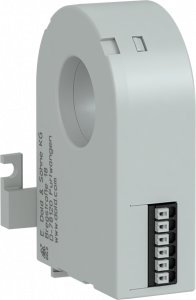
Residual Current Monitors (RCMs) – Continuous Vigilance and Active Protection
RCMs interpret LC waveforms, RMS values, leakage current faults and insulation degradation patterns, giving operators real-time insight across distribution grids.
The Role of RCMs in Proactive Electrical Safety
RCMs enable:
- Early detection of resistive leakage current
- Identification of capacitive leakage under changing humidity or weather conditions
- Trend analysis for state-based maintenance
- Fast mitigation of developing insulation faults
Key Features and Functionality
Modern RCMs include:
- True RMS measurement
- LC waveform analytics
- Partial discharge pulse recognition
- Online measurement for remote monitoring
- Support vector algorithms for classification of leakage types
- Communication with DCIM, BMS or SCADA
RCMs in Critical Applications
Deployed on:
- UPS outputs
- PDUs
- Busway distribution
- Cooling plant MCCs
- Generator transfer systems
Differentiating RCDs from RCMs
RCDs disconnect immediately.
RCMs monitor continuously, log events, analyse LC peaks, and do not interrupt redundancy unless necessary.
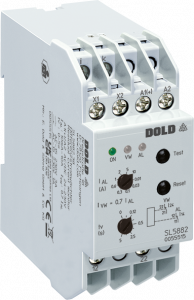
General Current Monitors – Beyond Residuals
General current monitors evaluate load currents, identifying:
- Overload
- Imbalance
- Motor faults
- Cooling system failures
- Current anomalies affecting insulation performance
Broader Current Monitoring
Useful for:
- Predicting mechanical wear
- Identifying increasing load currents
- Detecting energy-wasting conditions
- Supporting root-cause analysis after disturbances
Types of Current Monitoring
Includes:
- True RMS current monitors
- Adjustable relays
- Multifunction protection devices
- Optical fiber sensor-based systems
Applications
Used on:
- Cooling motors
- Pumps
- UPS modules
- PDUs
- Busways
Integration with Control Systems
General monitors connect to PLCs, safety relays, DCIM systems, and automated shutdown workflows.
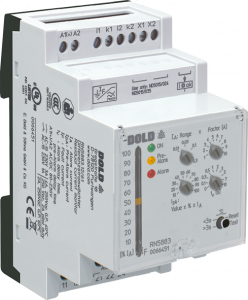
The Synergy of Safety: Creating a Comprehensive Electrical Protection Strategy
How RCTs, RCMs, and Current Monitors Complement Each Other
Together they deliver:
- Full-spectrum leakage detection
- Dielectric strength supervision
- On-line monitoring of insulation ageing
- Proactive reduction of failure risks
Meeting Regulatory Compliance
Includes:
- Adhering to leakage thresholds
- Coordinating with breakers
- Ensuring insulation performance meets standards
- Maintaining accurate field measurements
The Cost-Benefit of Proactive Monitoring
Prevents outages, reduces equipment wear, and removes guesswork from maintenance.
Selecting and Implementing Current Monitoring Solutions
Key Factors in Choosing the Right Devices
Consider:
- Harmonic environments
- Conductor geometry
- RMS value accuracy
- LC waveform measurement capability
- Communication protocol requirements
- On-line monitoring capability
Installation Best Practices
Important:
- Correct cable routing
- Avoiding strong magnetic field sources
- Ensuring accurate LC waveform capture
- Maintaining clearances around high voltage insulators
Maintenance and Testing
Includes:
- Periodic integrity tests
- Trending leakage values
- Conductivity meter sampling
- Reviewing dielectric modulus trends
- Field trials for verifying sensor performance
Advanced Considerations and Future Trends in Monitoring Safety
Smart Monitoring Systems
Now incorporating:
- AI-driven analytics
- Support vector classification models
- Predictive modelling
- Cloud-based dashboards
- Automated LC waveform interpretation
Specialized Monitoring
Includes:
- Standstill monitoring
- Ground fault location
- Explosion-proof monitoring zones
- High-sensitivity partial discharge detection
The Role of Safety Relays and Safety Controllers
They coordinate system-wide responses, ensuring redundancy is not compromised while faults are isolated safely.
Investing in Comprehensive Electrical Current Monitoring for Uncompromised Safety
Residual current transformers, residual current monitors and general current monitors are indispensable tools for protecting uptime in mission-critical data centers.
Recap of Key Benefits
- Detect insulation faults early
- Improve dielectric strength management
- Reduce total leakage current
- Strengthen power grid resilience
- Enable predictive maintenance
- Enhance operational performance
Evaluate your data center’s leakage detection strategy today. Optimising RCT, RCM, and current monitoring infrastructure is one of the most cost-effective steps you can take to prevent outages, improve safety, and extend the life of your electrical systems.