
Residual Current Transformers | Monitoring for Building Automation Residual current transformers and residual current monitors are now core safety components in modern building automation. In…
Residual Current Transformers | Monitoring for Building Automation
Residual current transformers and residual current monitors are now core safety components in modern building automation. In smart buildings, malls, hospitals, airports, hotels and high-rise offices, low voltage and medium voltage building distribution systems feed HVAC plants, lighting, elevators, fire systems and plug loads through complex automation panels and BMS logic.
A correctly selected residual current transformer for building automation, combined with residual current monitoring in building management systems, is essential for leakage current detection in BMS, earth leakage monitoring for buildings and long-term insulation performance. By monitoring LC waveforms, RMS values and total leakage current across distribution boards and mechanical plant rooms, building operators can prevent leakage current faults, improve commercial building electrical protection, and support predictive maintenance for building electrical systems.
This category page explains how residual current transformers (RCTs), residual current monitors (RCMs), core balance current transformers and general current monitors work together in smart building electrical monitoring to deliver safe, efficient and resilient building automation.

Safeguarding Electrical Systems – The Imperative of Current Monitoring
Modern building automation marries low voltage monitoring, medium voltage building distribution, BMS fault detection and energy management in one integrated ecosystem. Office towers, hospitals, data-enabled campuses and shopping centres rely on stable electrical installations feeding chiller plants, air handlers, lighting control, façades, elevators, EV chargers and life-safety systems.
Over time, weather conditions, humidity, condensation, dust, cleaning chemicals and load cycling all degrade dielectric strength and insulation performance in cables, panelboards, high voltage insulators on incoming feeders, surge arresters and distribution grids. Without dedicated building automation current sensors and residual current monitoring for building automation, resistive leakage current and capacitive leakage current can grow unnoticed until something trips or burns.
Residual current transformers, RCMs for building management systems, insulation indicators and current measurement devices provide on-line monitoring and field measurements of leakage phenomena. When tied into the BMS and energy management platform, they help facility managers maintain electrical safety in smart buildings while optimising energy use and availability.
The Unseen Dangers of Electrical Faults: From Shock Hazards to Fire Risks
Many dangerous faults in commercial buildings and smart facilities remain invisible until late in their lifecycle. Moisture along transmission line entries, polluted insulators on outdoor terminations, condensation in plant rooms and aging wiring in distribution boards create leakage paths that distort leakage current waveforms. LC peaks, partial discharge pulses and rising electric potential on metallic frames are early indicators of trouble.
If not monitored, total leakage current can heat busbars, panelboard terminations and trunking, especially in mechanical plant rooms where HVAC motors and VSDs are concentrated. In public areas – such as lobbies, retail spaces, hotel corridors and hospital wards – unnoticed leakage can create shock hazards, threaten fire safety and compromise critical loads like emergency lighting, fire pumps and smoke control systems.
Residual current monitors transform these unseen effects into actionable data, allowing building operators to see leakage trends before a circuit breaker trips or an incident occurs.
A Holistic Approach to Electrical Safety Monitoring
Effective building automation safety monitoring goes far beyond a few RCDs. A holistic approach combines:
- Residual current transformers (RCTs) and core balance current transformers in buildings
- RCMs for building management systems and BMS-integrated leakage alarms
- Insulation indicators and insulation performance trending for critical feeders
- Earth leakage monitoring for buildings via earth leakage relays
- General current monitoring on HVAC, lighting and pump circuits
- Surge arresters and high voltage insulators monitored for surface leakage
- Optical sensor and Hall current sensor solutions for advanced current detection
These elements work together in the BMS and automation panels to implement residual current fault prevention, building automation safety monitoring and on-line monitoring of electrical condition across the whole facility.
Understanding the Threats: Residual Currents and Other Electrical Anomalies
Buildings experience a mix of electrical anomalies due to diverse loads and distribution conditions. HVAC drives, LED drivers, switch-mode power supplies, lifts, escalators and façade systems all contribute to complex LC waveforms with resistive leakage current and capacitive leakage current components.
Low voltage building distribution and medium voltage building distribution are affected by:
- Insulation ageing and reduced dielectric modulus
- Contamination and surface conduction over insulators and cable terminations
- Weather conditions that change surface conductivity and moisture levels
- Harmonic distortion and switching transients from automation devices
Residual current monitoring in building automation focuses on the imbalance between outgoing and returning currents, while general current monitoring tracks load currents, power factor and RMS values to protect assets and maintain power quality.
What are Residual Currents? The Concept of Differential Current
Residual currents arise when the sum of currents in all live conductors does not equal the return current. In a healthy circuit, the magnetic field created by each conductor cancels within the RCT core. When leakage occurs – through damp insulation, polluted insulators, structural steel or pipework – magnetic field imbalance detection reveals a differential current.
Residual current transformers for building automation, including core balance current transformers installed in switchboards and automation panels, detect this imbalance. RCMs then evaluate LC waveforms, LC peaks and RMS values to determine whether leakage is within expected background levels for smart building electrical monitoring or indicative of a fault.
The Hazards Posed by Residual Currents: Personal and Equipment Risks
In building automation, residual currents create two major risks:
- Personal safety risk – Elevated electric potential on equipment enclosures, handrails, plant room pipework or lift shafts can expose maintenance staff or occupants to shock hazards.
- Equipment and uptime risk – Persistent leakage current faults accelerate insulation breakdown in panelboards, MCCs, HVAC transformers, lighting circuits and fire systems. This can lead to nuisance trips, loss of critical services or even ignition.
Insulation indicators, conductivity meters, and periodic field measurements support the continuous monitoring provided by RCTs and RCMs, ensuring commercial building electrical protection remains robust over the asset’s lifetime.
Beyond Residuals: Other Critical Current-Related Hazards
Beyond residual current, building automation must also address:
- Overload and unbalanced load currents in distribution grids
- Harmonic distortion from LED lighting and VSD-driven HVAC
- Inrush currents from lifts, pumps and chillers
- Partial discharge pulses in aged switchgear and cable systems
- Surface leakage across high voltage insulators feeding the building
Current measurement devices, optical sensor systems, Hall current sensors and hybrid model analytics (combining residual current data with load and power quality information) allow BMS fault detection algorithms to identify developing problems well before failure.
Residual Current Transformers (RCTs) – The Foundation of Leakage Detection
Residual current transformers form the sensing backbone of leakage monitoring in building automation. Installed on incoming feeders, riser circuits, mechanical plant room panels and distribution boards, they enable low voltage building distribution monitoring and, where applicable, sections of medium voltage building distribution.
How Residual Current Transformers Work: Principles and Operation
RCTs enclose all live conductors of a circuit within a toroidal core. Under normal operation, the magnetic fields from balanced currents cancel, and no net flux exists in the core. When leakage occurs – via damp cable entries, surface tracking or damaged insulation – the imbalance generates net magnetic flux.
This flux induces a secondary signal proportional to the differential current. RCMs then interpret that signal, analysing leakage current waveforms, RMS values and LC peaks to determine fault severity and support EC (electrical condition) decision-making in the BMS.
Types of RCTs and Their Applications: Tailoring Detection to Fault Characteristics
In building automation, different circuits demand different RCT characteristics:
- Type A RCTs for AC and pulsating DC leakage in typical automation panels and lighting circuits
- Type B RCTs for smooth DC and high-frequency leakage from modern VSDs, EV charging stations and certain UPS systems serving building loads
- Compact RCTs inside automation panels and local plant controllers
- Large-aperture core balance current transformers on riser busducts, main switchboards and mechanical plant feeders
- Special RCTs with optical sensor or Hall current sensor integration for advanced analytics in critical facilities
Selecting the correct residual current transformer for building automation ensures stable and accurate detection of leakage, even when LC waveforms are heavily distorted by electronic loads.
Installation and Sizing Considerations for RCTs
To achieve reliable residual current monitoring in building automation:
- Ensure all active conductors of a monitored circuit pass through the RCT (no protective earths).
- Choose an internal diameter matched to conductor bundles or busbars to avoid excessive free space.
- Avoid locating RCTs near strong external magnetic fields or heavily saturated magnetic structures.
- Securely mount RCTs in mechanical plant rooms to prevent vibration and misalignment.
- Route secondary wiring carefully to BMS panels or RCM modules to minimise interference.
These practices support accurate LC waveform capture and long-term on-line monitoring without nuisance alarms.
Integration with Safety Devices: From Relays to Circuit Breakers
RCTs feed residual current monitors, earth leakage relays and safety relays for building automation. Depending on configuration, their outputs can:
- Drive alarms in the BMS or fire panel
- Initiate controlled load shedding or failover strategies
- Trip circuit breakers or contactors in severe leakage current faults
- Inform energy management leakage detection and predictive maintenance models
This integration ensures that leakage detection contributes to overall electrical safety in smart buildings, without compromising continuity of critical services such as fire protection systems and life-safety circuits.
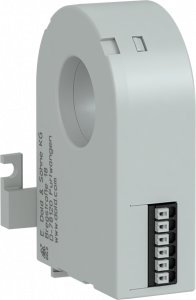
Residual Current Monitors (RCMs) – Continuous Vigilance and Active Protection
Residual current monitors are the intelligent layer sitting behind RCTs. They interpret LC waveforms, RMS values and total leakage current, convert them into alarms or status information, and communicate with the BMS and safety systems.
The Role of RCMs in Proactive Electrical Safety
RCMs allow building operators to move from reactive fault response to proactive electrical safety. By monitoring residual current over time, they reveal:
- Gradual insulation deterioration in riser mains or submains
- Weather-related changes in surface leakage on external equipment
- Abnormal leakage patterns in HVAC chiller plants, cooling towers and pump rooms
- Emerging problems in lighting circuits and automation panels before they trip RCDs
This supports state-based maintenance and reduces unplanned outages, especially in hospitals, airports, hotels and large office buildings where continuous services are required.
Key Features and Functionality of Modern RCMs
Modern RCMs for building automation typically include:
- Adjustable thresholds for different areas (e.g. plant rooms vs office floors)
- Configurable delays to avoid spurious trips in transient conditions
- True RMS value detection for leakage in distorted LC waveforms
- On-line monitoring capability with real-time alarm signalling
- Data logging for historical leakage analysis and support vector / hybrid model analytics in advanced BMS platforms
- Communication ports (Modbus, BACnet, Ethernet) for integration into BMS, DCIM or cloud dashboards
These capabilities make residual current monitoring in building automation a powerful tool for both safety and energy management optimisation.
RCMs in Specific Critical Applications
Residual current monitors are particularly valuable in:
- HVAC electrical protection – chiller plants, air handling units, pumps and cooling towers
- Lighting circuit leakage monitoring – long LED lighting runs, exterior façades and car parks
- Elevator electrical safety systems – lift motors, control panels and shaft supplies
- Fire protection electrical monitoring – fire pump systems, smoke control fans and emergency lighting panels
- Generator and UPS leakage detection – building backup supplies and essential load feeders
In each case, RCM data helps identify where leakage is increasing, allowing targeted intervention without disrupting the broader building automation strategy.
Differentiating RCDs (Residual Current Devices) from RCMs
In commercial buildings, RCDs protect final circuits by disconnecting immediately when leakage exceeds a set threshold. However, RCDs alone provide little diagnostic information and may cause nuisance trips in complex, leakage-rich environments.
RCMs, by contrast, continuously monitor leakage currents across many circuits and do not disconnect directly unless configured through relays and breakers. They are designed for residual current monitoring in building automation and BMS environments, providing detailed information, trending and remote management – exactly what facility managers need to balance electrical safety in smart buildings with operational continuity.
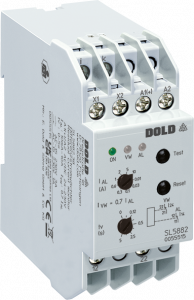
General Current Monitors – Beyond Residuals for System Health and Performance
While residual current monitors focus on leakage, general current monitors protect building services equipment from overload, imbalance and mechanical faults. They supervise load currents in HVAC, pumps, fans, elevators, booster sets and general building services.
Broader Current Monitoring for Preventative Maintenance and Operational Safety
General current monitors support predictive maintenance for building electrical systems by revealing:
- Rising load currents from failing bearings or blocked ducts
- Underload conditions indicating dry-running pumps or failed couplings
- Phase imbalance stressing motors and transformers
- Load drift in panels supplying large lighting or socket circuits
Combined with leakage monitoring, this delivers a more complete picture of equipment health than either method alone.
Types of Current Monitoring: True RMS, Adjustable, and More
Common general current monitoring devices in building automation include:
- True RMS current monitors for VSD-driven HVAC systems
- Adjustable overload/underload relays for pumps and fans
- Multifunction protection relays that combine voltage, current and frequency supervision
- Hall current sensors and optical sensor-based current measurement devices for non-intrusive monitoring
- Sensor-based monitoring devices integrated with BMS controllers for local logic and alarm escalation
Applications of General Current Monitoring
General current monitoring is typically applied to:
- Chiller compressors and condenser fans
- Air handling unit and supply/extract fans
- Booster pumps, sump pumps and fire pumps
- Escalators and lifts
- Large lighting and power distribution panels
Integration with Control Systems and Safety Relays
General current monitors feed signals to:
- BMS controllers for automation sequences and alarms
- Safety relays for building automation when hazardous situations arise
- Central BMS or cloud platforms for visualisation and analytics
This integration enables smarter decisions about equipment operation, maintenance scheduling and load management.
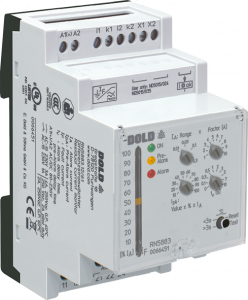
The Synergy of Safety: Creating a Comprehensive Electrical Protection Strategy
How RCTs, RCMs, and Current Monitors Complement Each Other
In a well-designed building automation system, residual current transformers, residual current monitors and general current monitors are deployed together to:
- Detect leakage faults at an early stage
- Supervise load currents for signs of mechanical or electrical stress
- Maintain insulation performance and dielectric strength across the network
- Provide reliable data for hybrid model and support vector-based analytics in advanced BMS platforms
The synergy of these devices transforms the building’s electrical system from a passive infrastructure into an actively monitored, condition-aware asset.
Meeting Regulatory Compliance: Standards and Best Practices
Residual current monitoring in building automation supports compliance with wiring regulations, fire safety standards and insurance requirements. Best practice includes:
- Using RCDs appropriately on final circuits while supervising upstream circuits with RCMs
- Monitoring leakage in key routes such as risers, main switchboards and mechanical plant rooms
- Documenting leakage levels and trends with on-line monitoring tools
- Periodically validating field measurements with portable test gear and conductivity meters
The Cost-Benefit of Proactive Monitoring: Reducing Risks and Downtime
Investing in RCTs, RCMs and building automation current sensors helps prevent:
- Electrical fires in switchrooms and plant rooms
- Unexpected shutdowns of HVAC and essential services
- Progressive damage to insulation and switchgear
- Costly callouts and emergency repairs
The cost of proactive monitoring is minor compared with the potential losses from even a single major electrical incident in a high-occupancy or critical building.
Selecting and Implementing Current Monitoring Solutions
Key Factors in Choosing the Right Devices
When selecting residual current transformers and monitors for building automation, consider:
- System topology (earthing system, distribution structure, building height)
- Load types (VSDs, LED drivers, lifts, UPS, EV chargers) and expected leakage patterns
- Required sensitivity for different zones (e.g. hospitals vs offices)
- Integration needs with BMS, fire systems and safety relays
- Installation constraints in existing switchboards and automation panels
Installation Best Practices: Ensuring Accuracy and Reliability
For accurate and reliable monitoring:
- Ensure correct routing of all phase and neutral conductors through RCTs
- Minimise influence from stray magnetic fields and high-current neighbouring circuits
- Maintain clear labelling and documentation to support state-based maintenance
- Use robust terminations and mounting hardware to withstand mechanical and thermal cycling
Maintenance and Testing: Ensuring Ongoing Safety Performance
Over the life of the building, ongoing maintenance should include:
- Functional testing of RCMs, relays and alarms
- Periodic review of leakage trends, LC peaks and partial discharge pulses
- Insulation resistance checks and correlation with on-line monitoring data
- Calibration or verification of current measurement devices where applicable
This ensures leakage detection remains aligned with real-world insulation performance and building risk profiles.
Advanced Considerations and Future Trends in Current Monitoring Safety
Smart Monitoring Systems: Predictive Maintenance and IoT Integration
Smart buildings increasingly use IoT-connected monitoring devices and cloud analytics to manage risk and efficiency. Residual current and load data can be combined with environmental and occupancy data to build hybrid models that:
- Predict future leakage current faults
- Optimise maintenance intervals
- Highlight abnormal dielectric behaviour
- Improve true positive rate and reduce false positive rate in fault detection
Specialized Monitoring: Standstill, Ground Fault Location, and Explosion Protection
In some building types – such as industrial plants, hazardous storage facilities or mixed-use complexes – specialised monitoring complements RCT and RCM deployments, including:
- Standstill monitoring on large rotating equipment
- Ground fault location equipment for complex distribution grids
- Monitoring in potentially explosive atmospheres (e.g. fuel depots, chemical storage)
The Role of Safety Relays and Safety Controllers in the Ecosystem
Safety relays and safety controllers connect the measurement layer to decisive action. They interpret signals from RCTs, RCMs, general current monitors and other building automation sensors, then execute safe shutdowns, alarm escalation, or reconfiguration as needed.
By designing building automation systems where residual current transformers, residual current monitors, general current monitors and safety relays work as one coordinated system, owners achieve a safer, more resilient electrical infrastructure.
Investing in Comprehensive Electrical Current Monitoring for Uncompromised Safety
Residual current transformers, residual current monitors and general current monitors have become essential components of building automation and building management systems. They underpin electrical safety in smart buildings, support predictive maintenance for building electrical systems, and reduce the likelihood of disruptive failures.
Recap of Key Benefits: Protection, Prevention, and Performance
By implementing RCTs and RCMs in building automation, facility owners gain:
- Early detection of insulation faults and leakage currents
- Reduced risk of electrical fires and shock hazards
- Improved uptime for HVAC, lifts, lighting and critical building services
- Better insight into insulation performance and dielectric strength
- Stronger compliance with safety and insurance requirements
- A data foundation for advanced analytics, hybrid models and on-line monitoring
Prioritizing a Safe Electrical Environment
If you manage or design building automation and BMS systems, now is the time to elevate residual current monitoring to a core design element. Assess your distribution boards, mechanical plant rooms and critical circuits for leakage monitoring coverage, and upgrade to modern RCTs, RCMs and current monitoring solutions.
Doing so delivers tangible gains in safety, reliability and operational efficiency – and positions your building portfolio for the evolving demands of truly smart, condition-aware infrastructure.