Interlocked Socket Outlets in Industrial Settings Interlocked socket outlets are a critical safety component in any industrial setting where high-power electrical equipment is connected and…
Interlocked Socket Outlets in Industrial Settings
Interlocked socket outlets are a critical safety component in any industrial setting where high-power electrical equipment is connected and disconnected under load. By combining a socket with a mechanical interlock, power is only made available when the correct operating sequence is followed.
This approach supports industrial machine safety, reduces human error, and protects both personnel and equipment in automated and hazardous machine areas.
Mechanical Interlock and Safety Interlock Principles
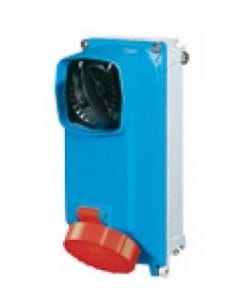
A mechanical safety interlock physically links the socket to a switching mechanism so unsafe operation is impossible. This differs from purely logical interlock systems, as mechanical interlocking does not rely on software or control logic alone.
A properly designed safety interlock ensures:
- Power is isolated before plug removal
- Live insertion is prevented
- Safe operating sequences are enforced
This makes mechanically interlocked socket outlets suitable for harsh and safety-critical environments.
Electrical Interlock Safety and Interlock Switch Function
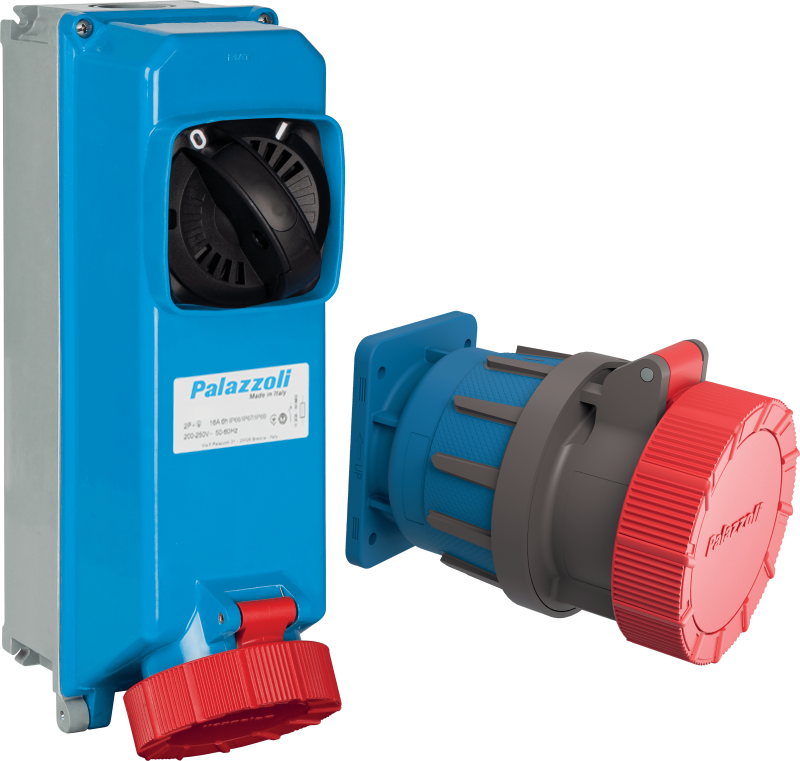
Electrical interlock safety is achieved using an interlock switch integrated into the socket mechanism. The interlock switch controls energisation and disconnection, often working in conjunction with rotary switches, disconnecting switches, or switch disconnectors.
These systems may interface with:
- Circuit breakers
- Non-fused switch disconnectors
- Machine controls and access control systems
This layered approach strengthens electrical isolation and personnel protection.
Safety Interlock Switches and Compliance
Safety interlock switches are widely used in industrial power systems to meet modern safety regulations and recognised safety standards. When applied to socket-outlets, they enforce correct disconnection before access is permitted.
Relevant safety frameworks include:
- ISO 14119 for interlocking devices
- ISO 13849 for functional safety of control systems
Compliance improves system integrity, reduces safety downtime, and supports structured safety procedures.
Heavy Duty Electrical Sockets and Housing Design
Heavy duty electrical sockets are engineered to withstand mechanical stress, vibration, and repeated operation. Housing material selection is critical, with options including impact-resistant plastic and robust industrial enclosures designed for dust and water protection.
Key design features may include:
- Secure locking force
- Reinforced cable entry ports
- Durable housing material for long service life
These features are essential in automated environments and washdown environments.
IP Ratings and Environmental Protection
An interlocked socket designed for harsh conditions must meet appropriate IP ratings. An IP67 rating indicates full dust protection and resistance to temporary water immersion, making it suitable for outdoor installations and demanding industrial applications.
High IP protection is especially important where electrical wiring is exposed to moisture, contamination, or aggressive cleaning processes.
Electrical Protection and System Integration
Interlocked socket-outlets are commonly integrated into wider circuit protection systems, working alongside circuit breakers, thermal overload protection, and isolation devices. This ensures safe disconnection during fault conditions and controlled reconnection during operation.
Such integration is vital in systems involving motors, automated machinery, and electrically driven processes.
Why Interlocked Socket Outlets Matter
By combining mechanical interlock, safety interlock switch technology, and compliance with recognised industrial electrical safety standards, interlocked socket outlets deliver safer power distribution in industrial environments.
They support:
- Personnel protection
- Equipment protection
- Reliable operation in harsh conditions
- Compliance with modern safety regulations
For industrial power systems, interlocked socket outlets are not optional—they are a foundational safety solution.
Engineer-Focused Selection Guide
When specifying industrial interlocked socket outlets, confirm:
-
Rated current and voltage for the load
-
Mechanical interlock type (non-bypassable)
-
Switching device (rotary/disconnector)
-
IP rating for environment (IP67 for harsh sites)
-
Housing material for impact and chemicals
-
Integration with breakers and machine safety
If the socket allows live removal, lacks a true mechanical interlock, or isn’t sealed for the environment—it’s the wrong product.