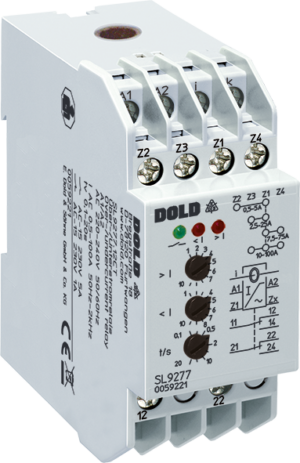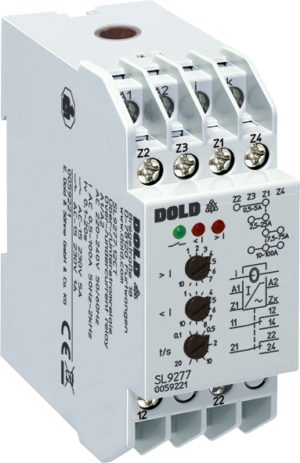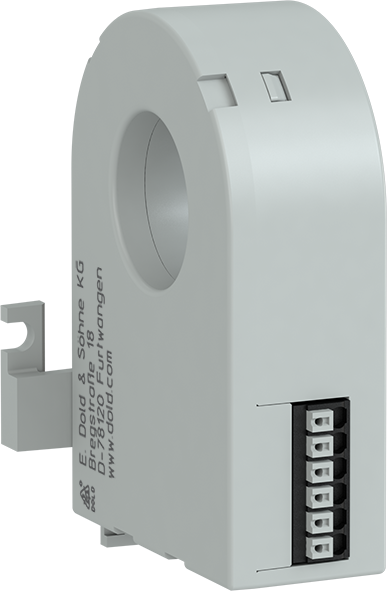
Residual Current Transformers Residual current transformers and residual current monitors are essential components in modern electrical equipment used across industrial plants, data centers, EV charging…
Residual Current Transformers
Residual current transformers and residual current monitors are essential components in modern electrical equipment used across industrial plants, data centers, EV charging stations, hospitals, and commercial buildings. These devices form the backbone of industrial safety, machinery safety, and industrial automation, detecting dangerous leakage currents before they escalate into electric shock, equipment damage, or electrical fires. Their ability to perform accurate residual current detection, monitor insulation resistance, and integrate seamlessly into any control cabinet makes them indispensable for today’s safety-critical applications.
This category page explains how residual current transformers (RCTs), residual current monitors (RCMs), and general current monitors work together to deliver continuous electrical fault detection, enhanced safety performance, and reduced downtime in demanding industrial and data-center environments.
Safeguarding Electrical Systems – The Imperative of Current Monitoring
Electrical systems today are more complex, heavily loaded, and mission-critical than ever before. Between sensitive electronics, variable speed drives, EV charging infrastructure, and dense power distribution, the risk of undetected earth leakage and residual currents has increased substantially. Without proper monitoring, faults can remain hidden for weeks or months, slowly degrading insulation resistance and increasing the likelihood of catastrophic failure.
Residual current monitors, residual current transformers, and differential current monitors provide continuous visibility into electrical behaviour. They detect small leakage currents, identify developing earth faults, and measure primary residual current long before traditional protection devices respond. Their precise response times, configurable time delays, wide frequency range, and onboard LED indicators support a proactive safety and maintenance strategy.
The Unseen Dangers of Electrical Faults: From Shock Hazards to Fire Risks
Most dangerous electrical faults are invisible until they are severe. Residual currents creeping across deteriorated insulation, damaged cable jackets, or contaminated terminal blocks often remain below the threshold of conventional fuses and breakers. Even relatively small leakage currents can generate heat, create ignition points, raise residual voltage, or energise exposed metalwork.
Without a dedicated residual current monitor or earth leakage device, these faults threaten personnel safety, disrupt automation processes, and compromise critical electrical equipment. RCMs offer measurable, actionable data, enabling maintenance teams to intervene before failures escalate.
A Holistic Approach to Electrical Safety Monitoring
Electrical safety cannot rely on a single device. A comprehensive protection system combines residual current transformers, residual current monitors, RCD monitoring systems, insulation monitors, measuring relays, SSR monitors, and general current monitors into one harmonised safety architecture.
RCTs measure differential leakage; RCMs interpret the signal; overload relays and safety relays act upon it. Safety sensors and safety contacts tie the ecosystem together, creating a layered defence for industrial automation, machinery safety, and safety-critical applications.
Understanding the Threats: Residual Currents and Other Electrical Anomalies
Residual currents are one type of electrical anomaly. In industrial systems, engineers must also consider insulation resistance breakdown, earth faults, overloads, harmonics, and unbalanced loads. Proper detection requires different sensing technologies: RCMs, insulation monitors, overcurrent relays, differential current transformers, and general monitoring devices.
Residual current detection focuses on current that strays from the intended path. When leakage travels through earth, equipment chassis, or a person, safety is immediately compromised. Understanding how these currents form is essential for reducing risk and improving uptime.
What are Residual Currents? The Concept of Differential Current
Residual currents represent the imbalance between the sum of live conductor currents and the neutral return. Under healthy conditions, the vector sum is zero. An imbalance indicates leakage through unintended paths.
Residual current transformers detect this imbalance by enclosing active conductors inside a toroidal core. Advanced designs, such as differential current transformers, offer wide frequency range detection suitable for distorted waveforms common in drives and power supplies.
RCMs then evaluate the RCT signal against defined thresholds—e.g., 30 mA for personal protection or 300–500 mA for fire protection.
The Hazards Posed by Residual Currents: Personal and Equipment Risks
Residual currents create two major risks:
- Personal injury from electric shock, especially in conductive or medical environments.
- Equipment damage, including overheating of cables, terminal points, and protective devices.
High-level leakage can accelerate insulation breakdown, disrupt safety contacts, and compromise electrical equipment in control cabinets and automation systems.
Beyond Residuals: Other Critical Current-Related Hazards
Overloads, voltage imbalances, inrush surges, and harmonics also threaten system reliability. General current monitors, True RMS relays, and SSR monitors provide additional protection by tracking load behaviour and identifying mechanical or electrical issues.
Together with RCMs, these systems create a detailed picture of electrical health, enabling predictive maintenance and reducing downtime.
Residual Current Transformers (RCTs) – The Foundation of Leakage Detection
Residual current transformers serve as the primary sensing element in leakage detection systems. Positioned around active conductors, they measure the sum of currents and deliver accurate signals corresponding to leakage magnitude.
RCTs protect industrial machinery, EV chargers, data centers, and automation systems. Choosing the correct wire diameter capacity, internal opening size, accuracy class, and compatibility with primary residual current measurement requirements ensures proper performance.
How Residual Current Transformers Work: Principles and Operation
RCTs operate by surrounding phase and neutral conductors with a toroidal magnetic core. Under normal load, magnetic fields cancel each other. When leakage occurs, the imbalance generates measurable flux in the core.
The secondary winding converts this into a small signal sent to an RCM, which processes it according to configured thresholds, time delays, and responses.
Types of RCTs and Their Applications
Common categories include:
- Standard AC RCTs for sinusoidal faults
- Type A RCTs for AC + pulsating DC
- Type B RCTs for smooth DC and high-frequency leakage
- Wide-frequency RCTs for nonlinear loads
Correct selection ensures stable detection in industrial automation environments.
Installation and Sizing Considerations for RCTs
Correct installation requires:
- Selecting an RCT sized appropriately for wire diameter
- Ensuring adequate creepage and clearance
- Avoiding placement near high-noise conductors
- Routing all active conductors through the opening
Oversized apertures reduce sensitivity, while undersized ones obstruct installation.
Integration with Safety Devices: From Relays to Circuit Breakers
RCTs connect to RCMs, SSR monitors, VARIMETER RCM devices, measuring relays, and safety relays. These elements then initiate tripping sequences, alarms, or shutdown logic within a broader safety circuit.
Advanced systems integrate with PLCs, SCADA, and predictive maintenance platforms.
Residual Current Monitors (RCMs) – Continuous Vigilance and Active Protection
Residual current monitors continuously evaluate leakage signals, offering flexible thresholds, pre-alarms, trip levels, and detailed diagnostics.
Unlike RCDs, RCMs prioritise ongoing monitoring, trending, and analysis—ideal for data centers, industrial automation, and safety-critical operations.
The Role of RCMs in Proactive Electrical Safety
RCMs shift electrical safety from reactive to proactive. By tracking leakage trends, they highlight worsening insulation resistance, contamination, and wiring degradation long before failures occur.
In data centers and industrial facilities, this prevents unplanned outages, protects high-value electrical equipment, and improves operational resilience.
Key Features and Functionality of Modern RCMs
Modern RCMs—including Dold’s VARIMETER RCM series—offer:
- LED indicators for clear status
- Fast response times with configurable time delays
- Wide frequency range compatibility
- Safety contacts for machinery safety systems
- Analog 4–20 mA outputs
- Type A and Type B support
- Integration with SSR monitors and SCADA systems
These features make RCMs ideal for safety-critical applications.
RCMs in Specific Critical Applications
Residual current monitors deliver significant benefits in:
- Data centers (continuous leakage detection in PDUs and UPS systems)
- Hospitals and medical facilities (tight leakage control)
- EV charging stations (Type B monitoring)
- Industrial automation systems with drives and rectifiers
- Generator and mobile power systems
In these environments, RCMs preserve uptime, ensure compliance, and prevent fires.
Differentiating RCDs from RCMs
RCDs disconnect circuits when limits are reached. RCMs continuously measure, trend, and analyse leakage, integrating deeply into predictive maintenance frameworks and safety circuits—especially where shutdowns must be controlled or avoided.
General Current Monitors – Beyond Residuals for System Health and Performance
While leakage monitoring is essential, general current monitoring protects motors, transformers, and automation assets from overload, imbalance, and mechanical faults.
Standstill monitoring ensures machinery is completely stopped before personnel enter protected zones.
Broader Current Monitoring for Preventative Maintenance
General current monitors track real-time load data. Abnormal patterns may indicate blockages, worn components, declining insulation resistance, or phased imbalance—helping prevent downtime.
Types of Current Monitoring: True RMS, Adjustable, and More
General current monitors include:
- True RMS relays
- Adjustable overload/underload detectors
- Phase-sequence and phase-failure monitors
- Multifunction voltage/current relays
- SSR monitors for solid-state protection
Applications of General Current Monitoring
Used in:
- HVAC and cooling systems
- Pump and compressor monitoring
- Conveyor motor control
- Industrial plant distribution boards
Integration with Control Systems and Safety Relays
Modern monitors communicate with safety controllers, PLCs, and SCADA systems, enabling layered responses such as warnings, reduced speed, or safe shutdown.
The Synergy of Safety: Creating a Comprehensive Electrical Protection Strategy
When RCTs, RCMs, measuring relays, SSR monitors, safety sensors, and general current monitors operate together, they create a multi-layered safety architecture that protects electrical equipment, personnel, and critical machinery.
How RCTs, RCMs, and Current Monitors Complement Each Other
Combined, they offer:
- Early detection of leakage faults
- Overload and imbalance detection
- Predictive maintenance insights
- Deep integration into the safety circuit
Meeting Regulatory Compliance: Standards and Best Practices
Using Type B RCMs, maintaining documentation, and testing safety contacts regularly ensures compliance with IEC 62020 and AS/NZS safety requirements.
The Cost-Benefit of Proactive Monitoring
Preventing a single failure saves significantly more than the cost of installing RCMs, SSR monitors, and advanced measuring relays.
Selecting and Implementing Current Monitoring Solutions
Selecting the appropriate device involves considering:
- Load profile and harmonics
- Required sensitivity
- Wire diameter
- Safety-critical requirements
- Existing control cabinet layout
- Integration with SCADA/PLC systems
Installation Best Practices
To ensure accuracy:
- Route all active conductors through the RCT
- Match RCT aperture to wire diameter
- Avoid high-noise conductors
- Ensure proper shielding
- Verify safety contacts and safety circuit wiring
Maintenance and Testing
Regularly test RCM response times, verify insulation resistance trends, and inspect RCT wiring. This ensures consistent performance across the equipment lifecycle.
Advanced Considerations and Future Trends in Current Monitoring Safety
IoT-enabled monitoring platforms use residual current data, primary residual current measurements, and insulation resistance trends to predict failures. SSR monitor systems and RCMs increasingly feed into cloud analytics for remote troubleshooting and diagnostics.
Smart Monitoring Systems
These systems improve uptime by combining leakage, load, and environmental data for predictive maintenance and rapid fault response.
Specialised Monitoring
Includes:
- Standstill monitoring
- Ground fault location
- Explosion-protection monitoring
These complement RCMs in hazardous industrial environments.
The Role of Safety Relays and Safety Controllers
These devices interpret data from RCTs, RCMs, safety sensors, and SSR monitors to execute safe shutdown strategies and protect both personnel and electrical equipment.
Investing in Comprehensive Electrical Current Monitoring for Uncompromised Safety
Residual current transformers, residual current monitors, and general measuring relays are indispensable for ensuring electrical safety, equipment longevity, and operational reliability.
Recap of Key Benefits
- Early detection of leakage and insulation resistance faults
- Improved industrial safety and automation reliability
- Enhanced machinery safety
- Fewer nuisance trips and reduced downtime
- Compliance with global standards
Evaluate your current leakage detection strategy and upgrade to modern RCTs, RCMs, and monitoring relays to ensure a safer, more resilient electrical environment.