
AS 4024 Emergency Stop Upgrades
keshav2026-02-13T15:54:18+10:00Emergency Stop Upgrades
AS 4024 Compliant Emergency Stop Safety Upgrades
Emergency stop performance is defined by system behaviour, not by the presence of a button.
In practice, emergency stop designs often fall out of compliance as machinery layouts, guarding arrangements, and control systems evolve. In Australian industrial environments, AS 4024–compliant emergency stop upgrades focus on restoring deterministic, validated stop behaviour across the entire safety of machinery architecture—not simply adding or relocating devices.
Emergency stop upgrades are typically retrofit-driven and must integrate cleanly with existing safety systems, machine guarding, and control architectures.
Common Safety Risks In Emergency Stop Designs
Emergency stop systems sit at the intersection of machine guarding, interlocks, and control systems. During hazard analysis and risk assessment, common emergency stop–related risks include:
- Emergency stop functions that do not remove energy from all hazardous movements
- Emergency stop systems implemented within standard control logic rather than safety-rated circuits
- Inconsistent emergency stop behaviour across interconnected machines or zones
- Emergency stop controls positioned outside effective safety zones or current access paths
- Emergency stop circuits lacking diagnostic coverage or fault detection
- Restart conditions that allow motion without deliberate operator acknowledgement
These risks are frequently identified in industrial environments where machines have been modified, relocated, or integrated into broader automation systems.
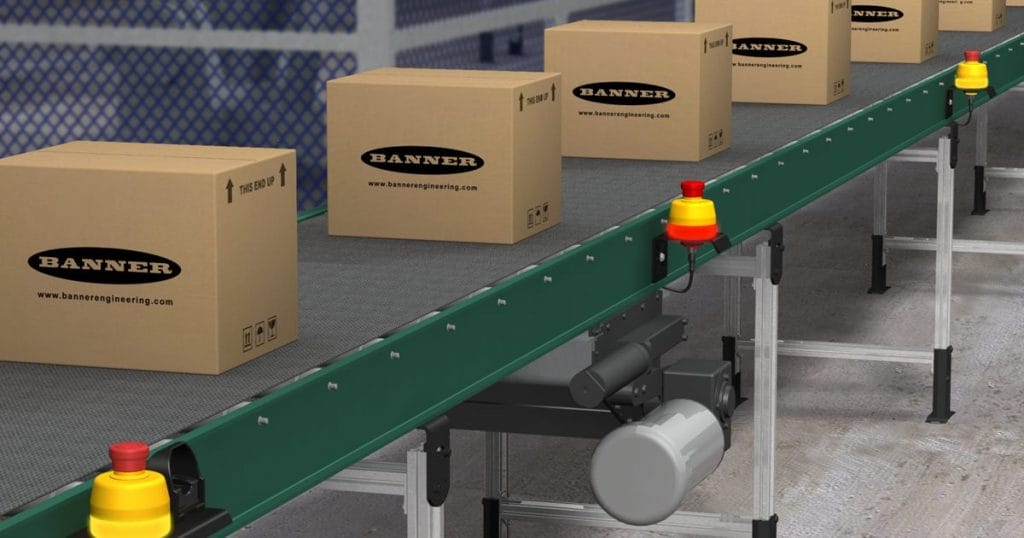
Why Older Emergency Stop Designs Fail AS 4024 Compliance
Many emergency stop designs still in service were implemented before current interpretations of Australian Standards under AS 4024 were adopted. Typical compliance gaps include:
- Emergency stop architectures not aligned with contemporary Safety of Machinery principles
- Emergency stop functions lacking documented verification or validation
- Guarding and emergency stop layouts that no longer reflect actual machine access points
- Control system upgrades performed without reassessing emergency stop integration
- Electrical and mechanical changes made without review against regulatory requirements or WHS regulations
As machinery becomes more interconnected through modern control systems, these shortcomings increase the likelihood of inconsistent or ineffective emergency stop behaviour.
Typical Safety Upgrades For Emergency Stop Designs
Emergency stop safety upgrades are structured to improve functional safety performance while maintaining compatibility with existing machinery and control infrastructure.
EMERGENCY STOP UPGRADES
Emergency stop design upgrades focus on ensuring predictable and validated emergency stop function across all hazardous conditions. Typical activities include:
- Reviewing emergency stop functions against AS 4024 safety requirements
- Redesigning safety circuits using safety-rated architectures
- Defining emergency stop zones aligned with guarding and access points
- Validating stop categories relative to machine inertia and stopping performance
These upgrades ensure emergency stop activation produces consistent and repeatable outcomes.
INTERLOCKING AND GUARDING
Emergency stop performance is closely linked to machine guarding and access control. Retrofit work commonly includes:
- Coordinating emergency stop logic with interlocking devices on guards and access gates
- Introducing guard locking where emergency stop alone does not control residual risk
- Ensuring emergency stop controls and interlocks are evaluated together within the safety logic
This integrated approach reduces reliance on procedural controls during maintenance and fault recovery.
SAFETY PLC INTEGRATION
Where emergency stop systems rely on hardwired logic or non-safety control platforms, safety PLC integration is often required. This typically involves:
- Migrating emergency stop circuits into a safety PLC architecture
- Separating emergency stop logic from standard control system functions
- Implementing diagnostics and monitoring for safety circuits and safety inputs
- Validating emergency stop behaviour under all operating modes
Safety PLC integration strengthens overall safety control systems and supports future machinery changes.
Our Approach To Emergency Stop Design Retrofits
Emergency stop design retrofits are developed following a structured risk assessment aligned with the AS 4024 series, Australian Standards, and applicable WHS regulations. The assessment considers hazards, safety zones, guarding interfaces, and interaction between emergency stop controls and other safety systems.
Retrofit designs are implemented to integrate with existing control systems and electrical installations. Verification and validation activities are conducted to confirm emergency stop performance meets defined safety requirements across all operational states.

Ready To Review Your AS 4024 Emergency Stop Design Compliance?
When To Upgrade Or Replace Emergency Stop Design
Upgrading an emergency stop design is generally appropriate where the underlying machinery and control systems remain serviceable. Replacement may be considered where:
- Existing architectures cannot meet required emergency stop performance
- Safety circuits cannot be validated without major redesign
- Control systems cannot support modern safety control integration
In most Australian facilities, targeted emergency stop upgrades deliver effective risk reduction without full system replacement.

Related Safety Upgrade Solutions
AS 4024 compliance is typically achieved through a combination of coordinated safety upgrades rather than a single change in isolation. Related safety upgrade pathways commonly include:
Machine guarding and safety zone upgrades aligned with required safety distances
Interlocking and access control system retrofits for monitored guard integrity
Safety PLC and safety-related control system upgrades
Integrated machinery safety validation and documentation
These elements are often implemented together to ensure consistent application of AS 4024 across interconnected industrial safety systems.
Machine Types We Upgrade Under AS 4024
We also provide machine-specific upgrade solutions across the following machines:
Next Step
If you are reviewing emergency stop compliance, responding to audit findings, or planning a safety system upgrade, contact us to discuss your application. We can assist with risk assessment, emergency stop redesign, and validation aligned with AS 4024 and Australian regulatory requirements.
Subscribe Our Newsletters
Get all the latest information on Events, Sales and Offers.