
AS 4024 Machine Safety Upgrades
keshav2026-02-16T07:53:41+10:00Machine Safety Upgrades
AS 4024 Compliant Machine Safety Upgrades
Across Australian industrial environments, many machines continue to operate reliably while no longer meeting current AS/NZS 4024:2019 (AS 4024) safety of machinery expectations. This gap typically emerges through incremental changes to control systems, guarding layouts, or operational requirements, rather than from a single failure.
AS 4024–compliant machine safety upgrades focus on restoring effective functional safety by aligning existing machinery with contemporary safety standards, regulatory requirements, and validated safety system architectures—without unnecessary replacement of mechanically sound assets.
Why Existing Machinery Often Fails AS 4024 Requirements
Most non-compliance issues arise when machines evolve operationally while their original safety systems remain static. Over time, this disconnect undermines the risk reduction assumptions established during the original machine design phase.
Common causes include:
- Machinery designed prior to the AS/NZS 4024:2019 Series
- Control system modifications performed without reassessing safety functions
- Guarding changes that alter safety distances or access paths
- Emergency stop circuits that no longer behave deterministically across integrated systems
- Safety functions embedded in standard PLC logic rather than safety-rated architectures
- Electrical safety changes not reviewed against applicable Australian Standards or functional safety principles under ISO 13849 and IEC 62061
These issues become more pronounced as machines are integrated into broader industrial automation systems and shared control environments.
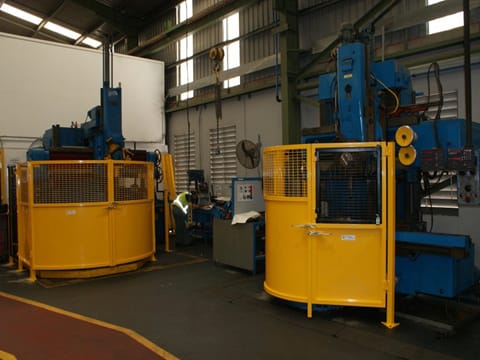
Typical Safety Upgrade Requirements Under AS 4024
AS 4024 safety upgrades are structured to restore and validate safety functions across the complete safety lifecycle, from hazard identification through to verification and documentation.
EMERGENCY STOP SYSTEMS
Emergency stop upgrades ensure predictable, fault-tolerant stopping behaviour across all hazardous functions and operating modes.
Typical upgrade activities include:
- Re-zoning emergency stop systems across machines, conveyors, and production lines
- Correcting emergency stop circuit architectures
- Removing dependencies on standard control logic
- Integrating emergency stop circuits into validated safety control systems
- Verifying stop performance under fault, reset, and abnormal conditions
These upgrades are critical where machines share control systems or operate within coordinated production environments.
INTERLOCKING AND GUARDING
Machine guarding upgrades address both mechanical guarding effectiveness and interlocking system performance, particularly where access patterns or operating practices have changed.
Common requirements include:
- Adding monitored interlocking systems to existing fixed or movable guards
- Upgrading interlocks to detect single faults and loss of integrity
- Introducing guard locking where residual motion or stored energy exists
- Revalidating guarding layouts against required safety distances
- Aligning guarding arrangements with the hierarchy of machine guarding defined in AS 4024
Guarding upgrades frequently expose legacy assumptions about operator behaviour that no longer reflect real-world use.
SAFETY CONTROL SYSTEMS
(PLCS AND RELAYS)
Legacy machines often rely on hardwired logic or standard PLCs that no longer meet modern machinery safety requirements.
Safety control upgrades typically involve:
- Migrating safety functions into safety-rated PLCs or safety relay architectures
- Separating safety circuits from standard control systems
- Monitoring safety inputs and outputs for discrepancies and faults
- Coordinating emergency stops, interlocks, and presence-sensing safeguards
- Supporting validation against AS 4024, ISO 13849-1, and IEC 62061
A structured safety control system architecture significantly reduces long-term risk and the likelihood of modification-related safety failures.
Ready To Review Your AS 4024 Safety Compliance?
Retrofitting Existing Machines Or Replacing Equipment
Retrofitting is usually appropriate where a machine’s mechanical structure remains serviceable and safety risks can be reduced through control system and guarding upgrades.
Replacement may be required where:
- Required safety upgrades impose unacceptable operational constraints
- Mechanical wear prevents effective guarding or predictable stopping performance
- Control systems cannot support compliant safety architectures
- Risk reduction targets cannot be achieved without fundamental redesign
For many Australian facilities, targeted AS 4024 upgrades provide compliant outcomes without unnecessary capital expenditure.

Our Approach To AS 4024 Safety Upgrades
Machine safety upgrades begin with a structured risk assessment aligned to AS/NZS 4024 Safety of Machinery requirements and relevant Australian Standards.
Our approach includes:
- Hazard identification and risk management review
- Assessment of existing safety systems and control architectures
- Evaluation of guarding effectiveness and safety distances
- Design of compliant safety-related control architectures
- Functional testing, verification, and validation of safety functions
All upgrades are validated and documented to support WHS regulatory obligations under the Work Health and Safety Act 2011 and applicable workplace regulations.

Machine-Specific AS 4024 Safety Upgrade Solutions
While AS 4024 provides a consistent framework, implementation varies significantly by machine type and application.
Common machine-specific upgrade pathways include:
- Conveyor safety upgrades
- CNC and metalworking machinery safety upgrades
- Packaging, palletising, and filling system safety upgrades
- Robotic and automated cell safety upgrades
- Bespoke process and manufacturing equipment
Each category presents distinct hazards, access requirements, and safety control challenges.
Machine Types We Upgrade Under AS 4024
We also provide machine-specific upgrade solutions across the following machines:
Compliance, Validation, and Documentation Considerations
Achieving AS 4024 compliance requires verifiable evidence that safety functions perform as intended under all defined conditions.
Typical deliverables include:
- Updated machine safety risk assessments
- Safety circuit and control system documentation
- Functional safety verification and validation records
- Evidence of alignment with AS 4024, ISO 13849, and IEC 62061
- Clear definition of operational and maintenance responsibilities
Robust documentation supports audits, future modifications, and regulator engagement.

Next Step
If you are reviewing machinery safety compliance, responding to audit findings, or planning equipment upgrades, a structured AS 4024 assessment can help identify practical retrofit pathways without unnecessary replacement.
Contact us to discuss AS 4024–compliant machine safety upgrades aligned with your equipment, operating environment, and regulatory obligations.
Subscribe Our Newsletters
Get all the latest information on Events, Sales and Offers.